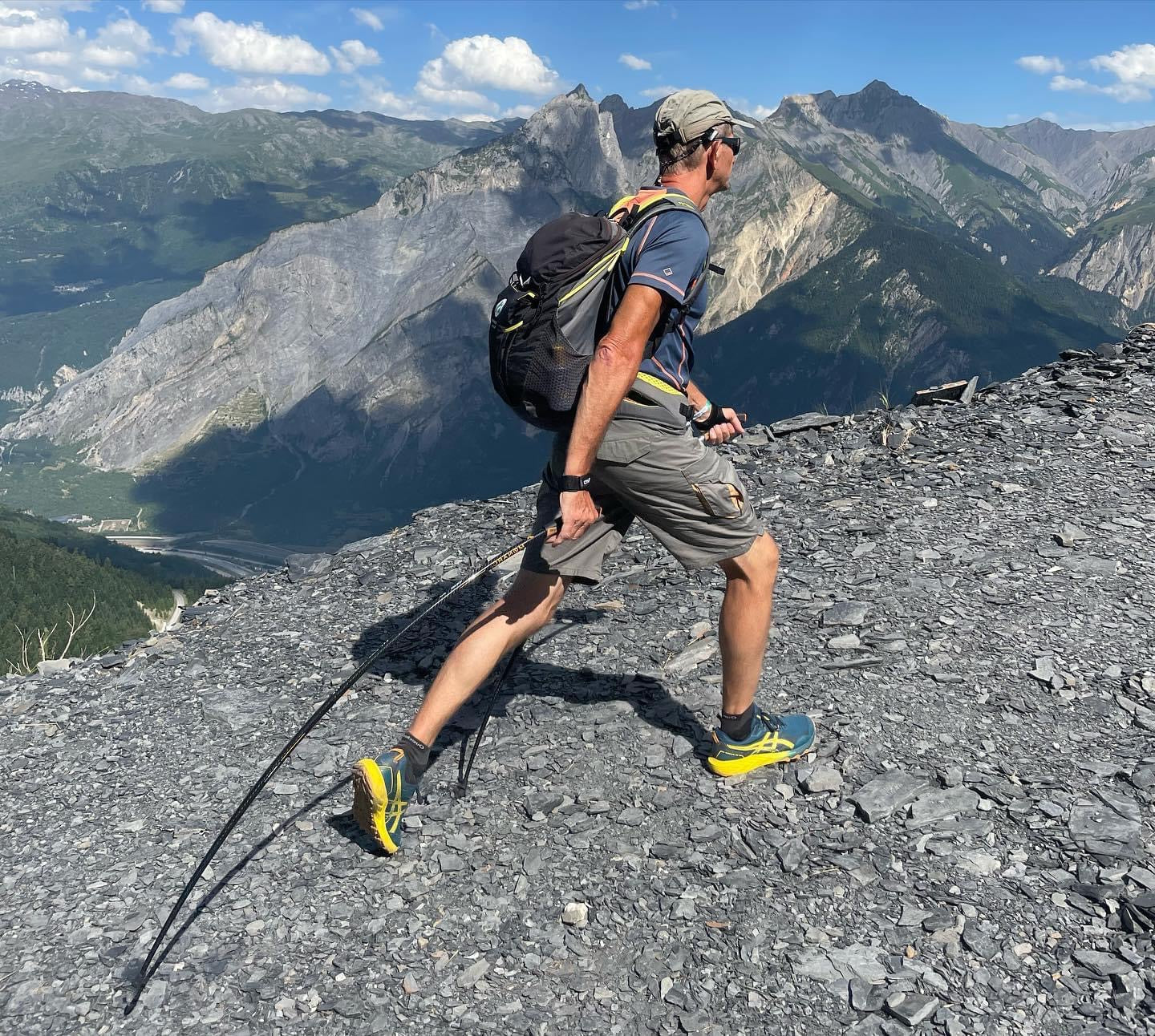
Nordic Walking and Weight Loss: A Practical 12-Week Programme
Yes, Nordic walking helps you lose weight. At the same speed, it uses more energy than ordinary walking without feeling any harder, and people stick with it better. But weight comes off mainly when regular practice goes hand in hand with a suitable diet. Here is what the studies say, followed by a 12-week programme to get there.
In short
- More energy burned: at the same speed, Nordic walking uses 7 to 23% more energy than walking, according to studies, with no extra perceived effort.
- In figures: for 80 kg, allow about 360 kcal per hour at an easy pace and 445 kcal at a brisk pace.
- Volume matters: walk at least 2 h 30 a week; beyond 4 hours, the effect on weight becomes clearer.
- Diet decides: without it, weight loss stays modest and varies widely from person to person.
- A realistic pace: for people with obesity, the French National Authority for Health (HAS) suggests 1 to 2 kg a month on average, with medical follow-up. Track your waist size too.
- The programme: over 12 weeks, you go from 3 outings of 30 minutes to 4 outings a week, including a long one.
Why Nordic walking helps you lose weight
With poles, your arms, shoulders and back join in with every step. That upper-body work costs energy. On a 1,600-metre track, at the same pace, Nordic walking required about 20% more oxygen than walking without poles. Energy expenditure rose by about 20% (17% in women, 21% in men), without participants finding the effort any harder (Church et al., 2002). Depending on the study, the extra cost ranges from 7 to 23% on flat ground (Baek and Ha, 2021). The much higher percentages that sometimes circulate do not match what published studies measure on average.
More intensity, no extra perceived effort
In a 12-week trial in women with obesity, the Nordic walking group trained at a higher heart rate and spent more time at high intensity than the walking group, for the same perceived effort (Figard-Fabre et al., 2011). A six-month trial in overweight adults reached the same conclusion, with a higher heart rate and a lower perceived effort in Nordic walking (Muollo et al., 2019).
People stick with it
This may be the most important point, because weight loss plays out over months. In the 12-week trial, the Nordic walkers attended 91% of sessions, against 81% in the walking group (Figard-Fabre et al., 2011). Over six months, 21% of participants dropped out of Nordic walking, against 36% for walking (Muollo et al., 2019).
What the programmes show
A review of ten studies in people with overweight or obesity found reductions in weight, BMI and body fat, more marked in supervised, frequent programmes. Its authors suggest 4 to 5 sessions of at least 60 minutes a week, ideally with dietary control (Gobbo et al., 2019).
Combined with a diet, Nordic walking gave encouraging results in a six-month Italian trial with three sessions a week. BMI fell in both groups (by 6% with Nordic walking, 4% with walking), but only the Nordic walking group lost a significant amount of body fat, including 14% of its abdominal fat (Muollo et al., 2019).
A meta-analysis of twelve studies calls for some caution, though. In it, body fat and abdominal fat fall compared with the starting point, but without a significant difference from control groups (Sanchez-Lastra et al., 2020). Nordic walking is therefore no magic wand, but it lets you move a lot, for a long time and with pleasure, and it is this volume of activity that counts for your weight.

How many calories does an hour of Nordic walking burn?
The Compendium of Physical Activities, the international reference used by researchers, gives Nordic walking an intensity of 4.3 METs at a moderate pace (4 to 5.6 km/h), 5.3 METs at around 6 to 7 km/h and 8.8 METs uphill, against 3.8 METs for walking at about 5 km/h (Herrmann et al., 2024). One MET is the energy you use at rest. To get the calories burned in an hour, multiply the number of METs by your weight in kilos, then by 1.05.

| Weight | Walking, 5 km/h | Nordic walking, 4 to 5.5 km/h | Nordic walking, 6 to 7 km/h | Uphill Nordic walking |
|---|---|---|---|---|
| 60 kg | 240 kcal | 270 kcal | 335 kcal | 555 kcal |
| 70 kg | 280 kcal | 315 kcal | 390 kcal | 645 kcal |
| 80 kg | 320 kcal | 360 kcal | 445 kcal | 740 kcal |
| 90 kg | 360 kcal | 405 kcal | 500 kcal | 830 kcal |
| 100 kg | 400 kcal | 450 kcal | 555 kcal | 925 kcal |
| 110 kg | 440 kcal | 495 kcal | 610 kcal | 1,015 kcal |
These figures include what your body burns at rest anyway, about 1 kcal per kilo per hour, so the real extra due to walking is roughly 20% lower. They are averages that vary with technique, terrain and pace. The study details are in our article How many calories do you burn Nordic walking?
By the end of the programme, with just over 4 hours of Nordic walking a week, a person weighing 80 kg burns roughly 1,500 to 1,900 kcal a week. To pace yourself, use your heart rate zones, explained in our article What speed for Nordic walking? Pace, heart rate zones and progress.
The role of diet
Nordic walking increases the energy you burn; diet decides whether your weight goes down. According to the American College of Sports Medicine (ACSM), weight loss stays modest between 150 and 250 minutes of moderate activity a week and becomes clinically significant beyond 250 minutes. Activity also improves the results of moderate dietary restriction, but not those of a severe diet (Donnelly et al., 2009).
Another study shows the role of compensation. For 12 weeks, 35 overweight people trained five times a week under supervision. On average they lost weight, but with huge differences from one person to another. Those who lost less than predicted ate about 270 kcal more per day and felt hungrier (King et al., 2008).
What helps at the table
- Avoid strict diets: the HAS warns against overly restrictive and unbalanced diets.
- Lighten your meals: eat more vegetables, fruit and pulses, and fewer fatty and sugary foods.
- Watch portion sizes, especially after big outings, when your appetite rises.
- Do not reward yourself automatically after a session, because a pastry wipes out a good part of the calories from an hour's walk.
- Water is enough for a one-hour outing.
- Get support from your doctor or a dietitian if you have obesity, diabetes or ongoing treatment.
What rate of weight loss should you aim for?
The HAS sets cautious benchmarks. For people who are overweight without an associated condition, the first goal is not to gain weight and, if waist size is high (80 cm or more for women, 94 cm or more for men), to reduce it. For people with obesity, it recommends aiming for a loss of 5 to 15% of initial weight, with realistic targets, meaning 1 to 2 kg a month on average, with medical follow-up (HAS, 2011). Losing 5 to 10% already lowers the risk of type 2 diabetes, as explained in our article Nordic walking and type 2 diabetes.
Measure your waist every two weeks rather than weighing yourself every day. Weight varies from day to day with water and meals; waist size better reflects abdominal fat, the kind doctors keep an eye on.
The 12-week programme
The programme takes your walking volume from 1 h 30 to 4 h 15 a week, in six two-week steps. Most of it is done at conversation pace, in zone 2 (around 60 to 70% of your maximum heart rate), when you can still speak in full sentences. From week 5, one session a week includes brisk stretches (slightly out of breath, short sentences); from week 7, a long outing is added.
Before you start
If you have obesity, heart disease or diabetes, or if you have not been physically active for a long time, ask your doctor's advice. Our article on Nordic walking and obesity details the precautions to take.

| Weeks | Sessions | Content | Total per week |
|---|---|---|---|
| 1 and 2 | 3 × 30 min | Conversation pace, on the flat. Work on your technique by swinging your arms well forward and pushing backwards. | 1 h 30 |
| 3 and 4 | 3 × 40 min | Conversation pace; one outing on gently rolling terrain. | 2 h |
| 5 and 6 | 4 × 40 min | One session with 5 rounds of 2 min brisk and 3 min easy; the others at conversation pace. | 2 h 40 |
| 7 and 8 | 3 × 45 min and 1 long outing of 1 h | One session with 6 rounds of 3 min brisk and 2 min easy; long outing at conversation pace. | 3 h 15 |
| 9 and 10 | 3 × 50 min and 1 long outing of 1 h 15 | One hill session, with brisk climbs and easy descents. | 3 h 45 |
| 11 and 12 | 3 × 55 min and 1 long outing of 1 h 30 | One session with 3 rounds of 8 min brisk and 3 min easy; long outing on varied terrain. | 4 h 15 |
Each session starts with 5 minutes of slow walking and ends with a 5-minute cool-down. If a week feels too hard, repeat it, because a programme completed in 14 weeks is better than one abandoned. The WHO also recommends two muscle-strengthening sessions a week (standing up from a chair, wall press-ups, core exercises). These sessions do not speed up weight loss, but they help preserve muscle mass (Donnelly et al., 2009).
Are you a complete beginner? Start with our 8-week Nordic walking training programme, which builds your technique, then move on to this one.
Sticking with it for 12 weeks
- Book your slots like appointments, on the same days each week.
- Walk with others. The best results come from supervised, frequent programmes (Gobbo et al., 2019). A club gives you set times, an instructor who corrects your technique and partners who wait for you. Our article helps you find a club near you.
- Log your outings: record the duration, distance and pace measured by GPS. With poles, the step count on your watch is skewed, as explained in our guide to apps and smartwatches.
- Track your waist size every two weeks, at the same time of day.
- Choose poles that fit: length = height × 0.68; between two lengths, take the shorter one (a very sporty walker can take the one above). All the details are in the size guide.
- Listen to your body: persistent pain, unusual breathlessness or chest discomfort mean stopping and seeking medical advice.
Do you run a club? The MØNARC® Partner Club label gives your members €30 off each pair of Arcs de Marche® and your club preferential terms on certified training courses. You can then equip a whole group following this programme together.
What the Grenoble study measured on curved poles
The Arcs de Marche® are the first poles whose shape has been scientifically compared with straight poles. At Université Grenoble Alpes, eight regular Nordic walkers walked at 5 and 6 km/h with both types of pole, in random order.

At the same speed, oxygen uptake and heart rate did not change, so the Arcs do not make you burn more calories by themselves. They change how your effort is used. The push becomes more horizontal and more efficient, vibration decreases, and the upper body (biceps, triceps, deltoids, lats) tends to work harder. This matters for weight loss, because you want to repeat a pleasant movement, for longer and more often. Allow a few outings to find your rhythm. The measurements are detailed in the Université Grenoble Alpes study (in French).
Frequently asked questions
How long does it take to see results?
Fitness improves within a few weeks. In the trial by Figard-Fabre et al. (2011), aerobic capacity in the Nordic walking group increased over 12 weeks. For weight, it all depends on your diet and how much you walk; for people with obesity, the HAS considers an average loss of 1 to 2 kg a month with medical follow-up to be realistic. Judge your progress on waist size and pace, not just on the scales.
How many times a week should you walk to lose weight?
Walk at least three times a week, for a total of at least 2 h 30 (WHO, HAS). For a clear effect on weight, aim for more than 4 hours, spread over 4 to 5 outings (Donnelly et al., 2009; Gobbo et al., 2019). That is the goal of the final weeks of the programme.
Does Nordic walking reduce belly fat?
You cannot choose where you lose fat. But with a suitable diet, abdominal fat goes down along with the rest. In the trial by Muollo et al. (2019), it fell by 14% over six months in the Nordic walking group. Waist size is the right measure to track.
Nordic walking or brisk walking for weight loss?
At the same speed, Nordic walking burns more, with no extra perceived effort, and two trials show better attendance. But the best activity is still the one you will keep doing. If you enjoy brisk walking, keep it and add outings with poles.
Can you lose weight without changing your diet?
It is possible, but the loss is usually modest and very variable, because some people compensate by eating more (King et al., 2008). Programmes combining activity and diet give the best results.
Do curved poles burn more calories?
At the same speed, they do not burn more, because the Grenoble study found no difference in oxygen uptake. The Arcs de Marche® do, however, make your push 22% more efficient and reduce arm vibration, which makes outings more pleasant and therefore easier to keep up.
Sources
- Church T.S., Earnest C.P., Morss G.M., Research Quarterly for Exercise and Sport, 2002, 73(3): 296-300.
- Baek S., Ha Y., BMC Sports Science, Medicine and Rehabilitation, 2021, 13: 14.
- Herrmann S.D. et al., “2024 Adult Compendium of Physical Activities”, Journal of Sport and Health Science, 2024, 13(1): 6-12.
- Figard-Fabre H. et al., “Efficacy of Nordic walking in obesity management”, International Journal of Sports Medicine, 2011, 32(6): 407-414.
- Muollo V. et al., “The effects of exercise and diet program in overweight people: Nordic walking versus walking”, Clinical Interventions in Aging, 2019, 14: 1555-1565.
- Gobbo S. et al., Journal of Functional Morphology and Kinesiology, 2019, 4(2): 36.
- Sanchez-Lastra M.A. et al., Journal of Physical Activity and Health, 2020, 17(7): 762-772.
- Donnelly J.E. et al., Medicine & Science in Sports & Exercise, 2009, 41(2): 459-471.
- King N.A. et al., International Journal of Obesity, 2008, 32(1): 177-184.
- Haute Autorité de santé (HAS), “Surpoids et obésité de l'adulte : prise en charge médicale de premier recours”, recommendations, September 2011.
- World Health Organization, Guidelines on physical activity and sedentary behaviour, 2020.
- Termoz N., Depery E., Lorenzi G., Université Grenoble Alpes study on MØNARC® curved Nordic walking poles.

The MØNARC® Arcs de Marche®
These curved 100% carbon Nordic walking poles weigh 140 g each. They are designed and assembled in France, and delivered ready to walk with straps, tungsten carbide tips and a made-to-measure bag.
Disclaimer. This article provides general information. It does not replace the advice of a doctor or health professional, nor supervision by a qualified instructor. Before starting or stepping up physical activity, especially if you have a health condition, pain or ongoing treatment, consult your doctor. Exercise according to your fitness, on suitable ground and with equipment in good condition. Each reader remains solely responsible for their own practice and for the decisions they make based on this information, and MONARC SAS cannot be held liable for their consequences.