Nordic Walking and Cholesterol: What Do the Studies Say?
Cholesterol, often cast as an enemy to be defeated, is in fact a molecule the body cannot do without. It is its excess, in particular the "bad" LDL cholesterol, that causes problems by accumulating on artery walls. Regular physical activity is one of the best-documented levers for improving the lipid profile. And Nordic walking in particular has a solid scientific record.
What science says about Nordic walking and cholesterol
A systematic review analysing the impact of Nordic walking on regular practitioners showed that several weeks of training at 3 sessions per week make it possible to reduce total cholesterol and triglyceride levels. These results, compiled by the Synapse Clinic, are based on the analysis of 10 independent studies.
Swiss sports medicine (Medbase) is even more direct: Nordic walking "helps fight high blood cholesterol levels", just as it fights hypertension and high blood sugar.
How does Nordic walking act on cholesterol?
Several mechanisms are at work:
- Fat mobilisation at low intensity: at a moderate pace, the body draws primarily on its lipid reserves. Nordic walking, practised in the aerobic zone, is an excellent "fat burner"
- HDL stimulation (good cholesterol): regular endurance exercise is one of the rare non-drug levers capable of raising HDL levels
- Whole-body mobilisation: engaging 90% of the muscles, Nordic walking generates a calorie expenditure of 400 to 600 kcal per hour, creating an energy deficit favourable to reducing blood lipids
- Reduction of systemic inflammation: regular physical activity reduces the inflammatory markers associated with atheroma plaques
How often for an effect on cholesterol?
The studies converge on a protocol of 3 to 5 weekly sessions of 30 to 60 minutes at a sustained but conversational pace. The effects become measurable on lipid panels after 8 to 12 weeks of regular practice. The more regular and prolonged the practice, the more lasting the benefits.
To optimise the effect, it is recommended to walk at an intensity that makes you sweat lightly without being out of breath: the "fat zone" of endurance training. Nordic walking, by nature, makes it easier to stay in this zone thanks to the greater muscular engagement it induces.
Nordic walking and diet: a winning duo
Physical activity alone is not always enough to normalise an unbalanced lipid panel. It is nonetheless a powerful complement to a sensible diet. Combined with reducing saturated fats and increasing unsaturated fatty acids (olive oil, oily fish, nuts), regular Nordic walking can contribute significantly to improving the lipid profile without systematically resorting to statins.
The role of poles in effort intensity
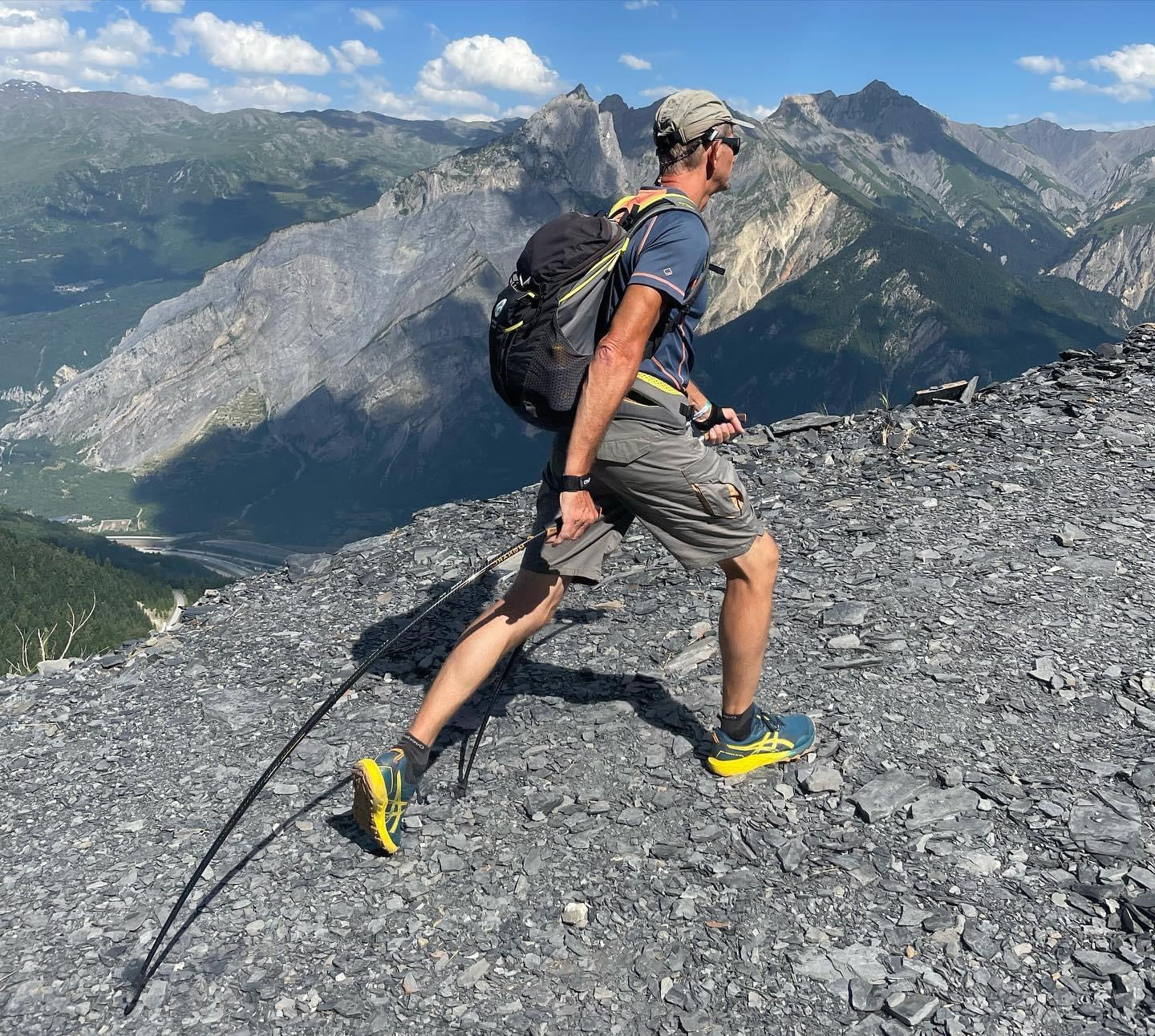
This is precisely where pole choice enters the cholesterol equation. Poles that are too heavy or ill-suited naturally reduce the duration and intensity of outings. High-performance poles, like the 140 g MØNARC® Arcs de Marche, make it possible to extend the effort with pleasure, lengthen the distances and optimise energy expenditure on every outing.
This article is for information purposes. It does not replace medical advice. If you are being treated for cholesterol, discuss your physical activity with your doctor.

The MØNARC® Arcs de Marche®
Curved 100% carbon Nordic walking poles, 140 g per pole, designed in France and assembled in France. Their curve directs the push more forwards and reduces the vibrations transmitted to the arms, two effects measured by Université Grenoble Alpes.
Disclaimer. This article provides general information. It does not replace the advice of a doctor or health professional, nor supervision by a qualified instructor. Before starting or stepping up physical activity, especially if you have a health condition, pain or ongoing treatment, consult your doctor. Exercise according to your fitness, on suitable ground and with equipment in good condition. Each reader remains solely responsible for their own practice and for the decisions they make based on this information, and MONARC SAS cannot be held liable for their consequences.