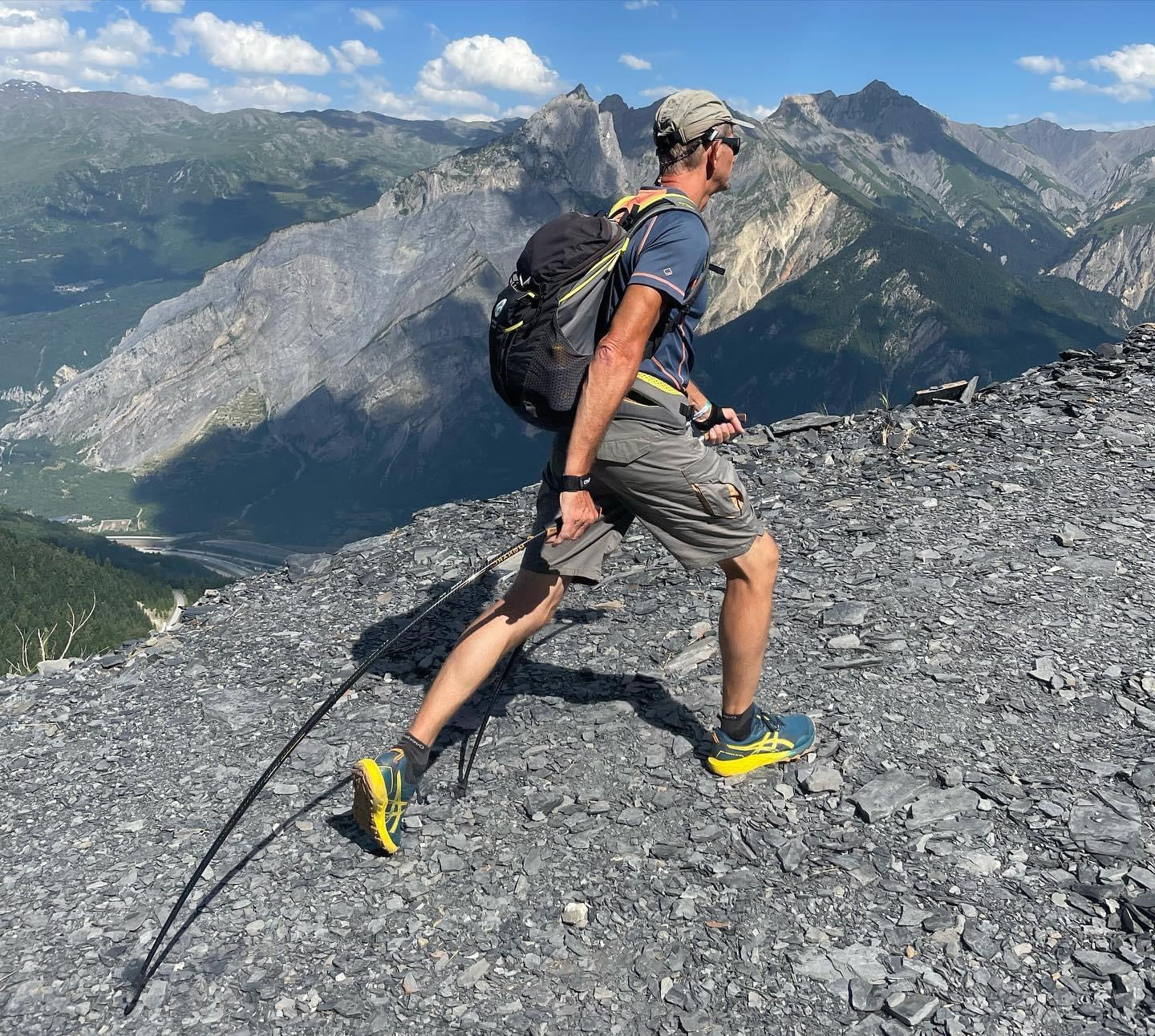
Nordic Walking: The Complete FAQ
Do you have questions about Nordic walking? You are not alone. Every year, thousands of people discover this discipline that blends sporting performance, medical benefits and outdoor pleasure. Here are the answers to the most frequent questions, gathered in one reference guide.
What is Nordic walking?
Nordic walking is a form of sporty walking using two dedicated poles to propel the body forwards with every step. Developed in Finland in the 1930s as summer training for cross-country skiers, it became widespread in the 1990s before becoming one of the most practised physical activities in Europe. In France, it is overseen by the French Athletics Federation (FFA).
What is the difference between Nordic walking and hiking with poles?
The difference is fundamental: in hiking, poles serve as passive support to relieve the knees on descents. In Nordic walking, poles are active propulsion tools. You plant them behind you to push the body forwards, in a coordinated arm-leg movement. This technique engages 90% of the body's muscles against around 40% for ordinary walking.
Do you need instruction to start?
It is strongly recommended to take at least 1 or 2 sessions with a certified coach before practising alone. The technique is not instinctive, and a poor movement from the start can generate shoulder and wrist pain and cancel out the benefits of the practice. Many FFA clubs offer free or inexpensive discovery sessions.
How do you calculate the right pole length?
The reference formula: multiply your height (in cm) by 0.68. For a person of 165 cm, that gives 112 cm: between 110 and 115 cm, take the shorter one, i.e. 110 cm. If in doubt, try the poles: planted vertically on the ground, the elbow angle should be slightly more than 90°. A very sporty walker can take the next length up for more propulsion. Our size guide details the method.
Aluminium or carbon: which material to choose?
Carbon is recommended for any serious practice. Aluminium poles transmit vibrations to the joints and can cause tendinitis over long distances. Carbon absorbs vibrations better and is lighter. A minimum of 50-70% carbon is advised for regular practice; 100% carbon for intensive practitioners, trail and ultra-walking.
What is a curved pole? How is it different from a straight pole?
Curved poles like the MØNARC® Arcs de Marche® are the only fully curved poles on the market. This curve changes the angle of the push force: a study by Université Grenoble Alpes measured a 13° angular difference, directing propulsion more towards the front. Result: significantly reduced perceived effort and superior comfort at the same pace. Straight poles remain very effective; curved ones bring an additional biomechanical benefit, particularly perceptible over long distances.

The MØNARC® Arcs de Marche®
Curved 100% carbon Nordic walking poles, 140 g per pole, designed in France and assembled in France. Delivered ready to walk with straps, tungsten carbide tips and a made-to-measure bag.
Is Nordic walking suitable for seniors?
It is even one of the most recommended activities after 60. It improves balance, strengthens bones (osteoporosis prevention), protects the joints, stimulates the cardiovascular system and fights depression and social isolation. Several dedicated studies on 60-80 year-old cohorts show significant improvements in muscle strength, respiratory capacity and quality of life after a few weeks of practice.
Does Nordic walking help you lose weight?
Yes, provided you practise regularly and at sufficient intensity. Nordic walking burns between 20% and 40% more calories than ordinary walking, that is, 400 to 600 kcal/hour depending on weight and pace. Studies show a loss of 0.7% to 6.4% of initial weight after 4 to 10 weeks of regular practice combined with a suitable diet.
Can you practise Nordic walking with joint pain?
In most cases, yes. Nordic walking is often recommended for people with knee osteoarthritis, hip pain or back problems, because the poles relieve the joints by around 30%. It is part of France's "sport on prescription" scheme. Nevertheless, consult your doctor or physiotherapist before starting if you have a joint condition.
Can you do Nordic walking in trail or over long distances?
Absolutely. The FFA offers events of more than 42 km (Ultra category). Ultra-endurance practitioners cover distances of 120 to 200 km in Nordic walking. For these formats, equipment quality is paramount: light, stiff poles, with detachable straps practical for refreshment stops. The MØNARC® Arcs de Marche® were designed to meet these demands.
How do you maintain your Nordic walking poles?
Rinse the tips and straps after every wet outing. Dry the poles before storing them. Use the rubber pads on asphalt to preserve the tungsten tips. Regularly check the tip fittings and the strap systems. Store the poles in their bag, away from direct sunlight. Our maintenance guide details every step.
Where can you buy MØNARC® curved Nordic walking poles?
The MØNARC® Arcs de Marche® are available directly on monarc-nordic.com, as a complete ready-to-walk pack including poles fitted with their grips, straps, tungsten carbide tips and a made-to-measure carry bag. They are also available on Amazon France.
👉 All our answers and our shop — monarc-nordic.com
Disclaimer. This article provides general information. It does not replace the advice of a doctor or health professional, nor supervision by a qualified instructor. Before starting or stepping up physical activity, especially if you have a health condition, pain or ongoing treatment, consult your doctor. Exercise according to your fitness, on suitable ground and with equipment in good condition. Each reader remains solely responsible for their own practice and for the decisions they make based on this information, and MONARC SAS cannot be held liable for their consequences.