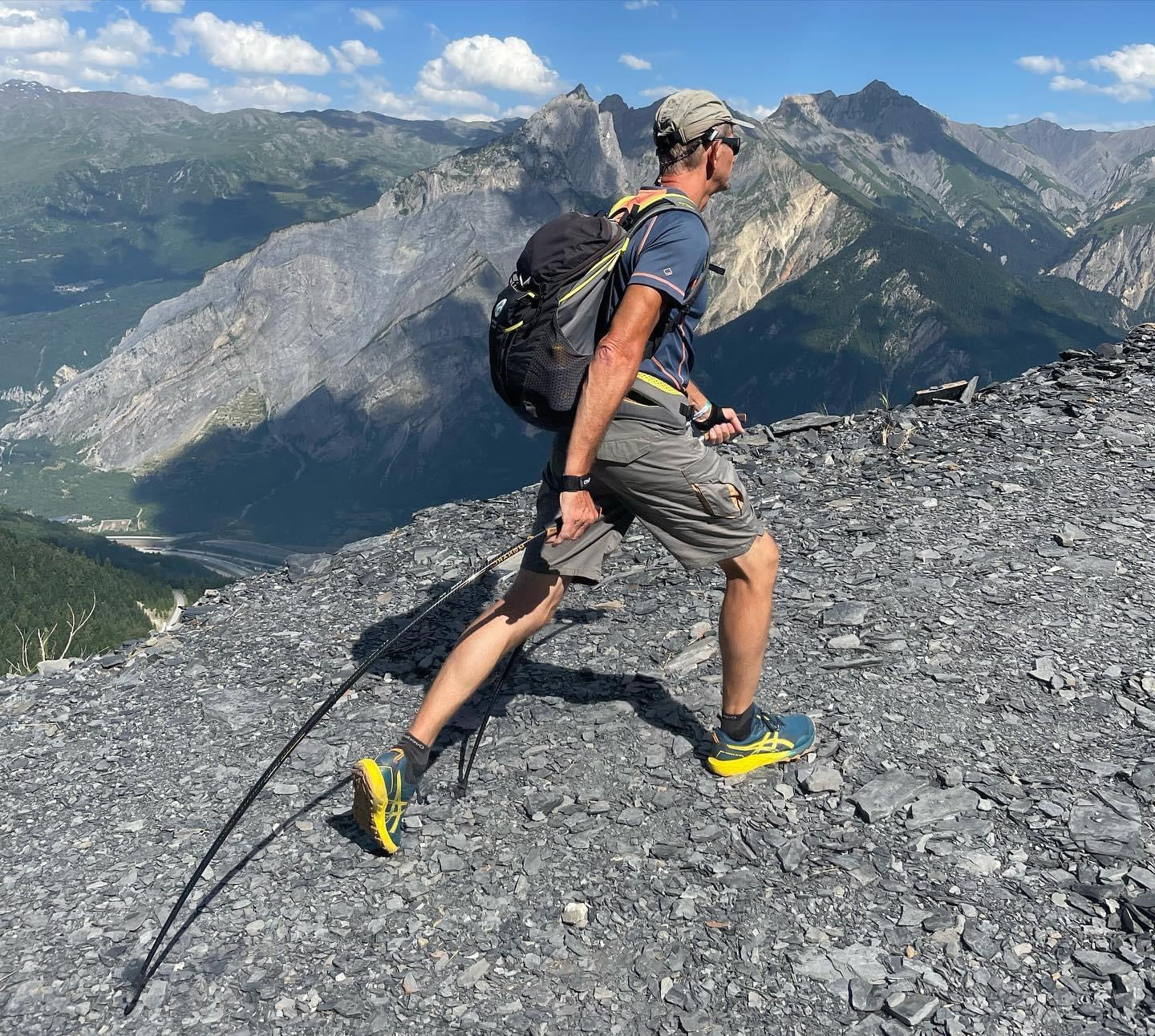
Lightweight Nordic Walking Poles: From What Weight Does It Really Make a Difference?
Every manufacturer highlights it: their poles are "light". But between 220 g, 180 g or 140 g per pole, the difference is not always visible on the label… while it is felt very quickly in the field. From what point can we speak of truly light poles? And what does it change for you in practice?
Weight, a detail on paper… a world of difference over 10,000 steps
A Nordic walking pole is lifted, planted and brought back with every stride. Over a 10 km outing, that easily represents more than 6,000 to 8,000 cycles for each arm. An extra 50 grams per pole is nothing on the scales. Repeated thousands of times, those 50 g become very real additional muscular work for the shoulders, biceps and forearms.
That is why high-end carbon models readily drop below 170 g per pole, and very technical models (such as the MØNARC® Arcs de Marche®) reach around 140 g fully equipped.
Three weight brackets to keep in mind
Broadly, poles fall into three categories:
- 220–250 g per pole: entry-level poles, often aluminium or low-carbon composite. Fine for very occasional practice, but quickly tiring over long distances.
- 170–200 g per pole: mid-range carbon, already much more pleasant. Well suited to regular practice, 1 to 2 outings per week.
- 130–160 g per pole: sporting high end. This is the zone of poles designed for long distances, competition, ultra-walking or cardiac rehabilitation where comfort comes first.
Below 160 g, every outing is done with freer shoulders and lighter arms. At the end of a session or an ultra, that difference in upper-body fatigue is striking.
A light pole… but not a fragile one
Making a pole lighter without making it fragile is a balancing act. Thinning the tube or lowering the quality of the carbon does save a few grams, but at the cost of lower resistance to impacts and twisting. The right compromise is to use high-quality carbon (such as T700) and controlled geometry.
The MØNARC® Arcs de Marche® follow this logic: T700 carbon, optimised full curve, a weight of around 140 g per pole, and a stiffness that withstands the demands of a vertical kilometre, an ultra-trail or a 200 km ultra-walk.
The direct link between pole weight and walking pleasure
Many walkers describe the same sensation when they switch to lighter poles: "I feel like I'm flying" or "the poles disappear". That does not come from a marketing argument, but from a biomechanical reality: the body spends less energy moving the equipment, and can concentrate its effort on propulsion and posture.
It is particularly visible among:
- People in cardiac rehabilitation, who must save every unnecessary effort.
- Walkers in ultra-walking or on multi-day hikes, for whom every gram saved translates into less fatigue at the end of the day.
- Practitioners of the vertical kilometre or steep climbs, which demand a great deal from the arms.

The MØNARC® Arcs de Marche®
Curved 100% carbon Nordic walking poles, 140 g per pole, designed in France and assembled in France. Delivered ready to walk with straps, tungsten carbide tips and a made-to-measure bag.
From what weight should you aim for a high-end model?
If you walk once a week over 5 km, a pole around 180–190 g may be enough. But as soon as you aim for outings of more than an hour, several times a week, or more committed projects (mountains, ultras, long-distance treks), aiming for a pole around 140–160 g becomes a choice of comfort and joint health.
The MØNARC® Arcs de Marche®, at around 140 g, sit clearly in that category. Weight is no longer a brake, it becomes an asset.
👉 Discover the MØNARC® Arcs de Marche®, carbon Nordic walking poles
Disclaimer. This article provides general information. It does not replace the advice of a doctor or health professional, nor supervision by a qualified instructor. Before starting or stepping up physical activity, especially if you have a health condition, pain or ongoing treatment, consult your doctor. Exercise according to your fitness, on suitable ground and with equipment in good condition. Each reader remains solely responsible for their own practice and for the decisions they make based on this information, and MONARC SAS cannot be held liable for their consequences.