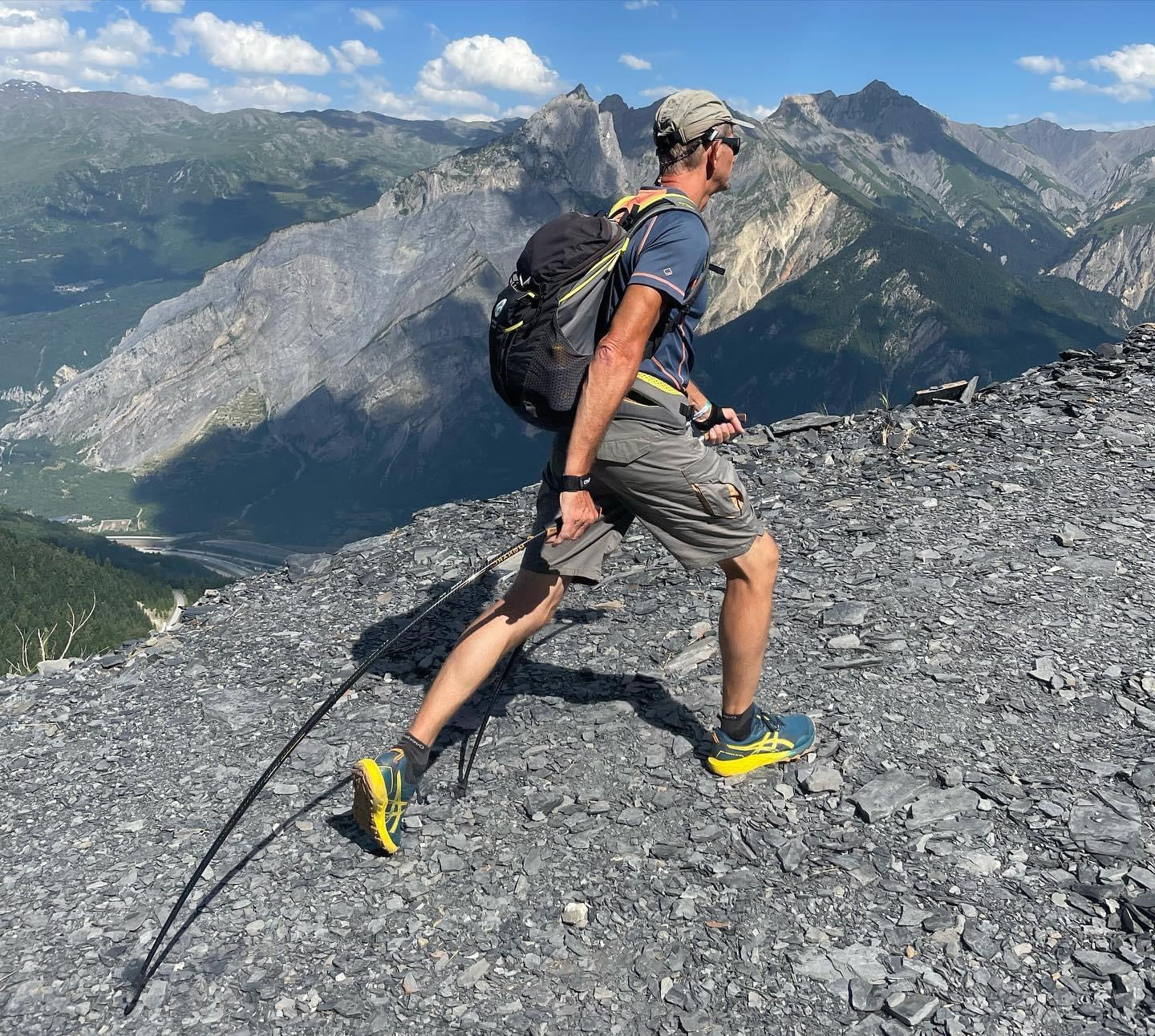
Hydrating Well for Walking in Hot Weather: The Complete Guide
Walking in summer has something precious about it, the light, the morning air, the pleasure of being outside. But when the thermometer climbs, hydration stops being a detail and becomes the condition of a successful, safe outing. Here are clear benchmarks for drinking right, before, during and after your Nordic walk, and the precautions to know when it is hot.
Why thirst always arrives too late
It is the most widespread mistake, and the most logical in appearance: waiting to be thirsty before drinking. The problem is that thirst is a late signal. When it appears, your body has already lost water. Sports doctors point out that the sensation of thirst is triggered when the athlete is already dehydrated by about 1% of their weight, which already corresponds to a performance drop of around 10%.
The longer dehydration settles in, the more the effect is felt. A water loss above 2% of body weight clearly impairs physical capacity and pushes the heart rate up. Water serves to regulate the body's temperature through sweating, and to carry oxygen and nutrients to the muscles. Lacking it means forcing the organism to work against the current.
The rule therefore fits in one sentence: drink before being thirsty, and never wait for that signal to start.
Before setting off
A good walk begins before the first step. The ideal is to hydrate regularly throughout the day, then drink about half a litre of water in the two hours before the outing. That amount prepares the organism without overloading the stomach, which would cause discomfort while walking.
No need to drink everything at once just before leaving. Better to spread it out, in small amounts, to arrive well hydrated without the sensation of a full stomach.

During the walk
The key word is regularity. Rather than big, spaced-out gulps, drink a little, often. The usual recommendations put the intake around 150 to 200 mL every fifteen to twenty minutes, of the order of half a litre to eight decilitres per hour of effort. In strong heat, the body absorbs water faster and sweats more, so you must drink more frequently.
The choice of drink depends on the duration. For an outing of under an hour, water is amply sufficient. Beyond that, or in strong heat, a drink containing carbohydrates and sodium helps to compensate the losses and retain water better, sodium being the key mineral lost through sweat. A practical point often forgotten: avoid iced water, which can cause abdominal pain. Prefer cool water, nothing more.
After the effort
Recovery also comes through the glass of water. The simple rule is to drink about one and a half times the weight lost during the walk. If you weighed yourself before and after and the scales show one kilo less, aim for a litre and a half in the following hours, in small amounts.
An easy field marker to check that all is well: the colour of the urine. Clear and abundant, hydration is good. Dark and scarce, you must drink more.

The case of walkers aged 50 and over
This passage deserves particular attention, because it concerns a large share of Nordic walking practitioners. With age, two mechanisms change. On the one hand, the sensation of thirst dulls, as the public prevention services point out: the signal arrives even later, or not at all. On the other, the body sweats less efficiently, which complicates temperature regulation in strong heat.
The consequence is simple. After a certain age, you must absolutely not rely on thirst. The right reflex is to drink to a rhythm, for example a glass at regular intervals, even without feeling the need. Also avoid alcohol and sugary drinks, which worsen dehydration instead of fighting it.
Walking when it is hot: the right habits
Beyond drinking, a few simple habits sharply reduce the risks in hot weather:
- avoid the hottest window, between noon and 4 pm, and favour early morning or early evening
- cover your head, wear light, pale clothing, and seek shade whenever possible
- scout in advance a route that passes near water points, and always carry a bottle
- adapt the pace and duration, because in strong heat the goal is to protect your health, not to set a performance
- if you walk in a group or a club, look out for one another, especially the most fragile
Recognising the warning signs
Knowing when to stop in time is as important as drinking well. The first signs of dehydration are marked thirst, dark urine, unusual fatigue, headaches, a drop in concentration and a heart beating fast for no apparent reason. Cramps can also appear.
If these signals come with dizziness, nausea, confusion or faintness, stop the effort immediately, get somewhere cool, wet the body and drink. Heatstroke is a medical emergency that can be life-threatening. In case of impaired consciousness, confusion or loss of consciousness, call 15 or 112 without delay. For any question during a heatwave episode in France, the Ministry of Health provides Canicule Info Service on 0800 06 66 66.

A word from MØNARC®
A pleasant summer walk comes down to a few things: good timing, water within reach, and a movement that does not exhaust you. It is on this last point that we work. Our Arcs de Marche® are designed for a more natural push and damped vibrations, enough to walk longer without overloading the wrist or the shoulders. The rest, hydration and common sense, is up to you. Happy walking, and stay cool.

The MØNARC® Arcs de Marche®
Curved 100% carbon Nordic walking poles, 140 g per pole, designed in France and assembled in France. Delivered ready to walk with straps, tungsten carbide tips and a made-to-measure bag.
Sources
- VIDAL, Que boire pendant le sport ?. https://www.vidal.fr/sante/nutrition/equilibre-alimentaire-sportif/besoins-eau-sportifs/que-boire.html
- OVERSTIM.s, Comment bien s'hydrater avant, pendant et après l'effort (advice from Dr Jean-Jacques Menuet, sports doctor). https://www.overstims.com/conseil/comment-bien-s-hydrater-avant-pendant-et-apres-l-effort/
- Nutri&Co, Hydratation pour le sport : que boire avant, pendant et après l'effort ?. https://nutriandco.com/fr/conseils/nutrition-endurance/hydratation-sport
- Ministère de la Santé, Conseils et gestes simples à adopter pour se protéger des fortes chaleurs. https://www.pour-les-personnes-agees.gouv.fr/actualites/conseils-et-gestes-simples-a-adopter-pour-se-proteger-des-fortes-chaleurs
- Assurance Prévention, Prévention canicule : les bons gestes pour se protéger des fortes chaleurs. https://www.assurance-prevention.fr/canicule-chaleur-prevention.html
- Agence Régionale de Santé Auvergne-Rhône-Alpes, Vagues de forte chaleur et canicule : comment se protéger ?. https://www.auvergne-rhone-alpes.ars.sante.fr/vagues-de-forte-chaleur-et-canicule-comment-se-proteger
- Ramsay Santé, Canicule : 5 conseils pour maintenir une activité physique malgré la chaleur. https://www.ramsayservices.fr/conseils-bien-etre/canicule-5-conseils-pour-maintenir-une-activite-physique-malgre-la-chaleur