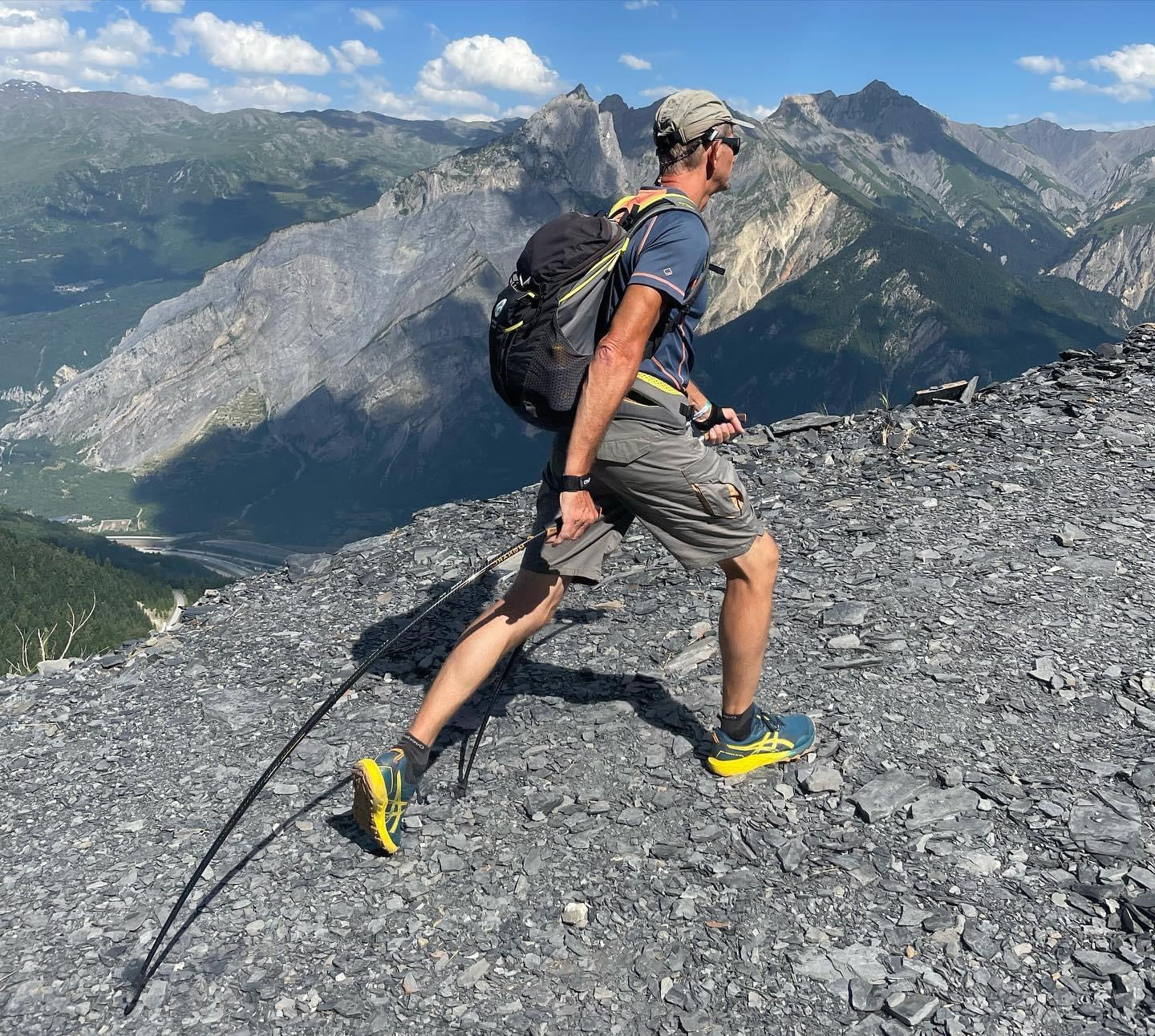
Nordic Walking and Depression: The Proven Benefits for Morale
One French person in five will be affected by depression during their life. Faced with this public-health challenge, drug treatments and psychotherapies remain the first-line approaches, but science has shown for several years that another actor plays a major, often underestimated role: regular physical activity. And Nordic walking in particular has a particularly suitable profile.
What science says in 2025-2026
A meta-meta-analysis published in 2026 in the British Journal of Sports Medicine, one of the most ambitious syntheses ever produced on the subject, analysed 63 studies covering 1,079 individual pieces of research and nearly 80,000 participants. Conclusion: regular physical exercise reduces depressive symptoms with an effectiveness comparable to drug treatments and psychotherapies in some cases. Endurance activities like brisk walking are among the most effective.
A study specifically focused on Nordic walking, published in the Journal of Physical Therapy Science, compared the effects of Nordic walking and ordinary walking in depressed patients. After 4 weeks, both groups improved. After 8 weeks, progress was significantly greater in the Nordic walking group.
The anti-depressant mechanisms of Nordic walking
Several biological and psychological mechanisms explain these effects:
- Release of endorphins and serotonin: endurance effort stimulates the production of these neurotransmitters directly associated with wellbeing
- Cortisol reduction: the stress hormone drops after a session of regular moderate physical activity
- The uprightness imposed by walking: as psychotherapist Pierre-Yves Brissiaud points out, "the verticality of walking relaxes the trapezius muscles, the upper back, the jaws. This physical relaxation immediately induces psychological relaxation"
- Exposure to natural light: walking outdoors regulates circadian rhythms and effectively fights seasonal affective disorder (SAD)
- The nature effect: natural environments reduce activity in the brain areas associated with depressive rumination
Nordic walking: a natural group anti-depressant
Practising in a club or with a group of friends adds a social dimension that amplifies the benefits. Social isolation is one of the best-documented aggravating factors of depression. Group Nordic walking breaks that isolation in the most natural way there is: walking together, breathing the same air, sharing the same effort.
The practitioners' accounts speak for themselves: you do not "go walking" to treat your depression, you go because you have an appointment with someone. And when you come back, something has lightened.
How often for an effect on morale?
The studies converge on 3 sessions per week of 30 to 45 minutes as the minimum threshold to observe a positive effect on depressive symptoms. The first improvements can appear in 2 to 4 weeks. For lasting effects, regularity over several months is decisive.
The role of equipment quality in regularity
We know that one of the first casualties of depression is motivation. Anything that makes the outing more pleasant, less constraining, more enjoyable increases the chances of going back. Light, high-performance poles, which turn every push into a fluid movement rather than an effort, are among those small levers that make a big difference over time.
This article is for information purposes. It in no way replaces medical or psychological care. If you suffer from depression, talk to your doctor.

The MØNARC® Arcs de Marche®
Curved 100% carbon Nordic walking poles, 140 g per pole, designed in France and assembled in France. Their curve directs the push more forwards and reduces the vibrations transmitted to the arms, two effects measured by Université Grenoble Alpes.
Disclaimer. This article provides general information. It does not replace the advice of a doctor or health professional, nor supervision by a qualified instructor. Before starting or stepping up physical activity, especially if you have a health condition, pain or ongoing treatment, consult your doctor. Exercise according to your fitness, on suitable ground and with equipment in good condition. Each reader remains solely responsible for their own practice and for the decisions they make based on this information, and MONARC SAS cannot be held liable for their consequences.