Nordic Walking and Pregnancy: What the Specialists Say
Pregnancy is not a reason to stop moving. Quite the opposite: France's health authorities, the sports ministry and the national college of gynaecologists and obstetricians recommend regular, moderate physical activity during pregnancy, unless medically contraindicated. And among the activities most cited by specialists: Nordic walking.
Why Nordic walking is particularly recommended during pregnancy
Nordic walking appears explicitly in the lists of activities recommended during pregnancy by recognised medical institutions such as the CHUV (Lausanne University Hospital) and the Concordia clinic. Its slightly forward-leaning posture, supported by the poles, has specific advantages for pregnant women:
- Relief for the lower-limb joints, which carry a growing weight as the pregnancy progresses
- Protection of the lower back and pelvis thanks to the support on the poles
- Reduced risk of contractions compared with other, more intense activities
- Opening of the ribcage encouraging better breathing
- Maintenance of overall muscle tone without overloading the abdominals
- Reduced risk of gestational diabetes and hypertension according to several meta-analyses
The official recommendations
General recommendations for physical activity during pregnancy call for at least 150 minutes of moderate activity per week, spread over several days. Nordic walking, practised at a moderate pace on flat or gently rolling terrain, fits perfectly into this framework. The reference test: being able to hold a normal conversation during the effort (the "talk test").
It is advisable to consult your doctor, gynaecologist or midwife before starting or continuing any physical activity during pregnancy, particularly if it is newly taken up.
Practical precautions for Nordic walking while pregnant
A few simple rules make it possible to practise Nordic walking safely throughout pregnancy:
- Choose stable, gentle terrain, especially in the third trimester
- Adapt duration and intensity to your energy level of the day
- Hydrate well before, during and after the session
- Stop immediately in case of pain, dizziness, bleeding or excessive breathlessness
- Prefer shoes with flexible, non-slip soles
- Choose poles at the right length to keep an upright, relaxed posture
The role of poles during pregnancy
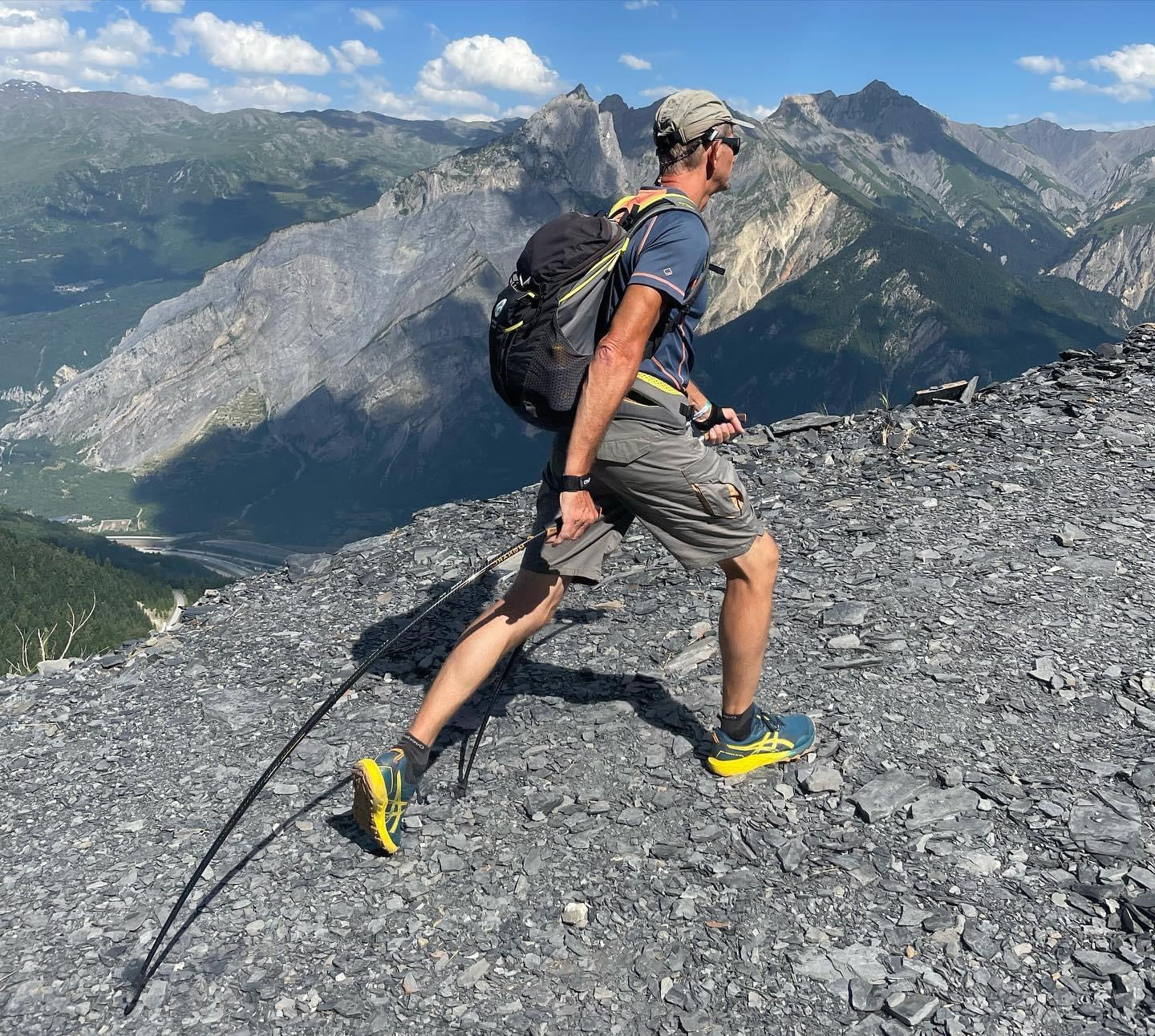
Using poles during pregnancy is no small thing: they make it possible to transfer part of the body's weight to the upper limbs, relieving the knees, hips and lower back. As the pregnancy advances and the centre of gravity shifts, this support becomes ever more precious for maintaining balance and confidence in movement.
Light, well-balanced poles, like the MØNARC® Arcs de Marche at 140 grams per pole, have an additional advantage: they do not tire the arms and shoulders over time, allowing longer, more comfortable outings.
Important note: this article is for information purposes. It in no way replaces the advice of your doctor or midwife. Always consult a health professional before starting or continuing physical activity during your pregnancy.

The MØNARC® Arcs de Marche®
Curved 100% carbon Nordic walking poles, 140 g per pole, designed in France and assembled in France. Delivered ready to walk with straps, tungsten carbide tips and a made-to-measure bag.
Disclaimer. This article provides general information. It does not replace the advice of a doctor or health professional, nor supervision by a qualified instructor. Before starting or stepping up physical activity, especially if you have a health condition, pain or ongoing treatment, consult your doctor. Exercise according to your fitness, on suitable ground and with equipment in good condition. Each reader remains solely responsible for their own practice and for the decisions they make based on this information, and MONARC SAS cannot be held liable for their consequences.