Nordic Walking Straps: Role, Sizes and How to Choose Them Well
The Nordic walking strap is often presented as a simple accessory. In reality, it is a fundamental technical part without which it is impossible to practise Nordic walking correctly. It is neither an ordinary wrist loop nor a sports glove: it is a biomechanical element in its own right.
Why is the strap indispensable?
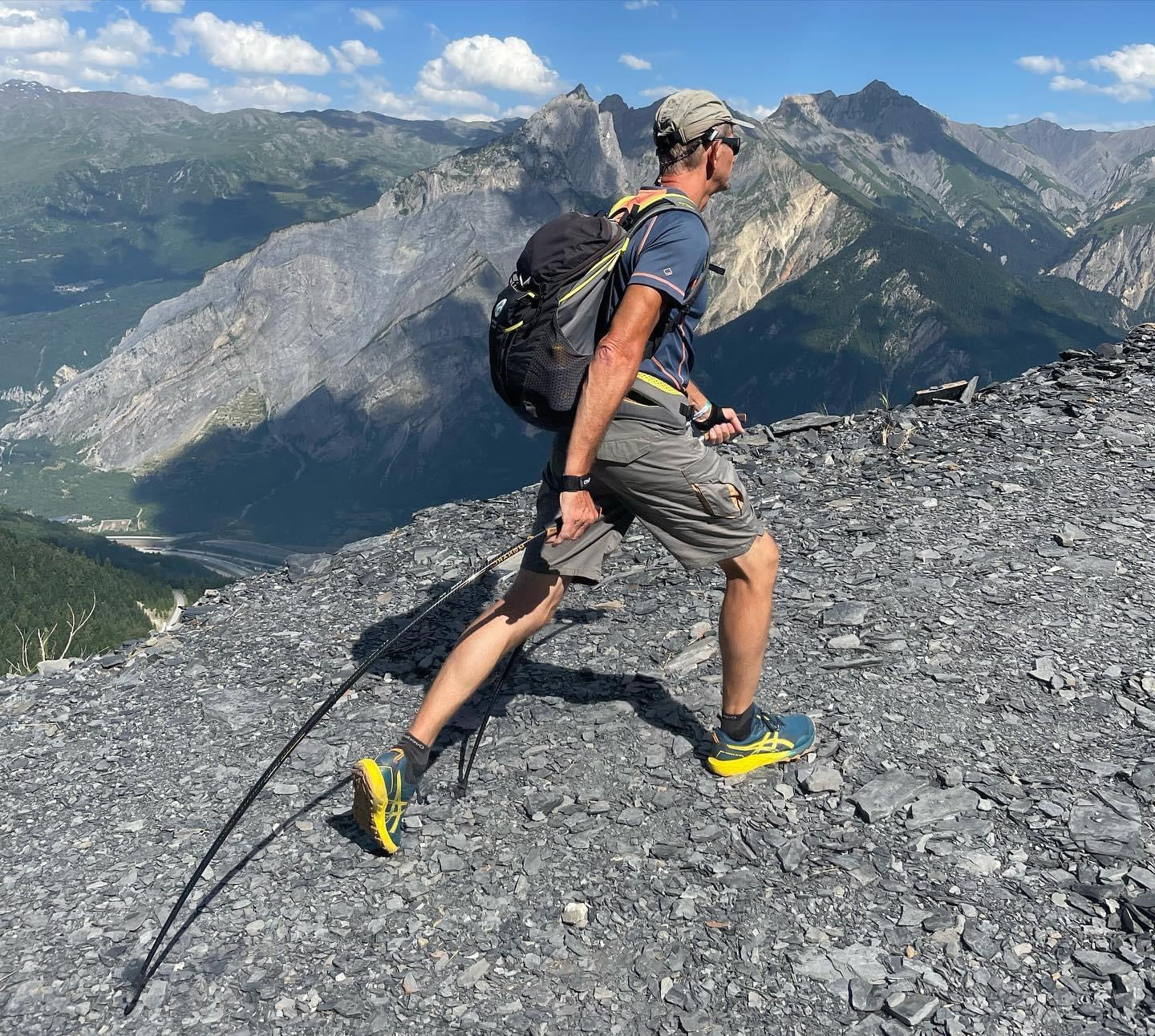
In Nordic walking, the technique requires opening the hand fully in the rear push phase. Without a strap, the pole would fall to the ground at every stride. The strap maintains contact between the hand and the pole without the fingers having to grip the handle constantly. This particularity makes it possible to extend the push well beyond the hip, which is impossible with a classic hiking wrist loop.
Biomechanical impact
The hand-opening phase, made easier by the strap, lengthens the arm's amplitude backwards and thereby increases forward propulsion. It also allows better blood circulation in the hands by alternating gripping and release phases. Without this mechanism, the Nordic push loses most of its efficiency: you end up walking with hiking poles, not practising Nordic walking.
The two main families of straps
Fixed straps are attached to the grip and come with the pole at purchase: practical for starting out, they are less comfortable in hot weather. Detachable straps release from the grip with a simple press or twist, which makes breaks, packing the poles away and maintenance easier. For regular practice, detachable straps are unanimously recommended by certified instructors.
How to choose your strap size?
Strap size is generally independent of pole length. It is chosen according to the size of your hand. To measure it: wrap a tape measure around your palm (at the knuckles of the four fingers, thumb excluded). The result in centimetres gives your hand circumference:
- S: under 18 cm
- M: 18 to 20 cm
- L: over 20 cm
On the MØNARC® pack, the straps come in S, M and L for lengths from 110 to 125 cm; at 100 cm, only in S; at 130 cm, only in L. Our size guide brings together the arc length and the strap size.
A strap that is too tight blocks circulation during effort and causes tingling. A strap that is too loose reduces the precision of the push and can create blisters through rubbing.
Maintenance and lifespan
Straps wear out before poles. Intensive practice (3 outings a week or more) often requires annual replacement. Regularly check the fixing seam on the grip and the state of the velcro band or closing system. The original straps compatible with MØNARC® are ergonomic, detachable and available in several sizes to suit all hands.

The MØNARC® Arcs de Marche®
Curved 100% carbon Nordic walking poles, 140 g per pole, designed in France and assembled in France. Delivered ready to walk with quick-release straps (S, M or L), tungsten carbide tips and a made-to-measure bag.
Key takeaway: The strap is not an accessory: it is the part that makes the Nordic technique possible. Choose it detachable, in your hand size, and replace it at the first signs of wear.
Going further
- What size Nordic walking poles should you choose? The complete guide
- The different types of Nordic walking pole tips: how to choose?
- One-piece or telescopic Nordic walking poles: which to choose?
- How to maintain your Nordic walking poles?
- Maintaining and storing Nordic walking straps
Disclaimer. This article provides general information. It does not replace the advice of a doctor or health professional, nor supervision by a qualified instructor. Before starting or stepping up physical activity, especially if you have a health condition, pain or ongoing treatment, consult your doctor. Exercise according to your fitness, on suitable ground and with equipment in good condition. Each reader remains solely responsible for their own practice and for the decisions they make based on this information, and MONARC SAS cannot be held liable for their consequences.