Nordic Walking and Heart Health: What the Studies Confirm
Nordic walking is not content with being a pleasant endurance sport. Recent clinical studies have made it one of the most interesting physical activities for cardiovascular health, including in patients with heart conditions.
Superior to HIIT for cardiac rehabilitation
A study published in 2024 by researchers comparing the effects of Nordic walking, high-intensity interval training (HIIT) and moderate-intensity continuous training concluded that Nordic walking is "statistically and clinically superior" to the two other modalities for increasing the functional capacity of patients with coronary disease within a cardiac rehabilitation programme (Ottawa Heart Institute, 2024).
Effects on blood pressure
Regular Nordic walking has shown positive effects on blood pressure in several follow-up studies. By engaging the whole cardiovascular system at moderate intensity for prolonged periods, it promotes better artery elasticity and a progressive reduction in systolic pressure.
Effects on resting heart rate
Like any endurance sport practised regularly, Nordic walking helps lower the resting heart rate. A heart that works more slowly at rest is a heart that works more economically and copes better with effort.
A sport accessible to cardiac patients
Nordic walking has the unique advantage of allowing a progressive increase in intensity, with very low traumatic risk. The effort can be finely dosed by adjusting speed, arm amplitude and terrain type. This is precisely why it is increasingly prescribed in exercise rehabilitation programmes after a cardiovascular event.

The MØNARC® Arcs de Marche®
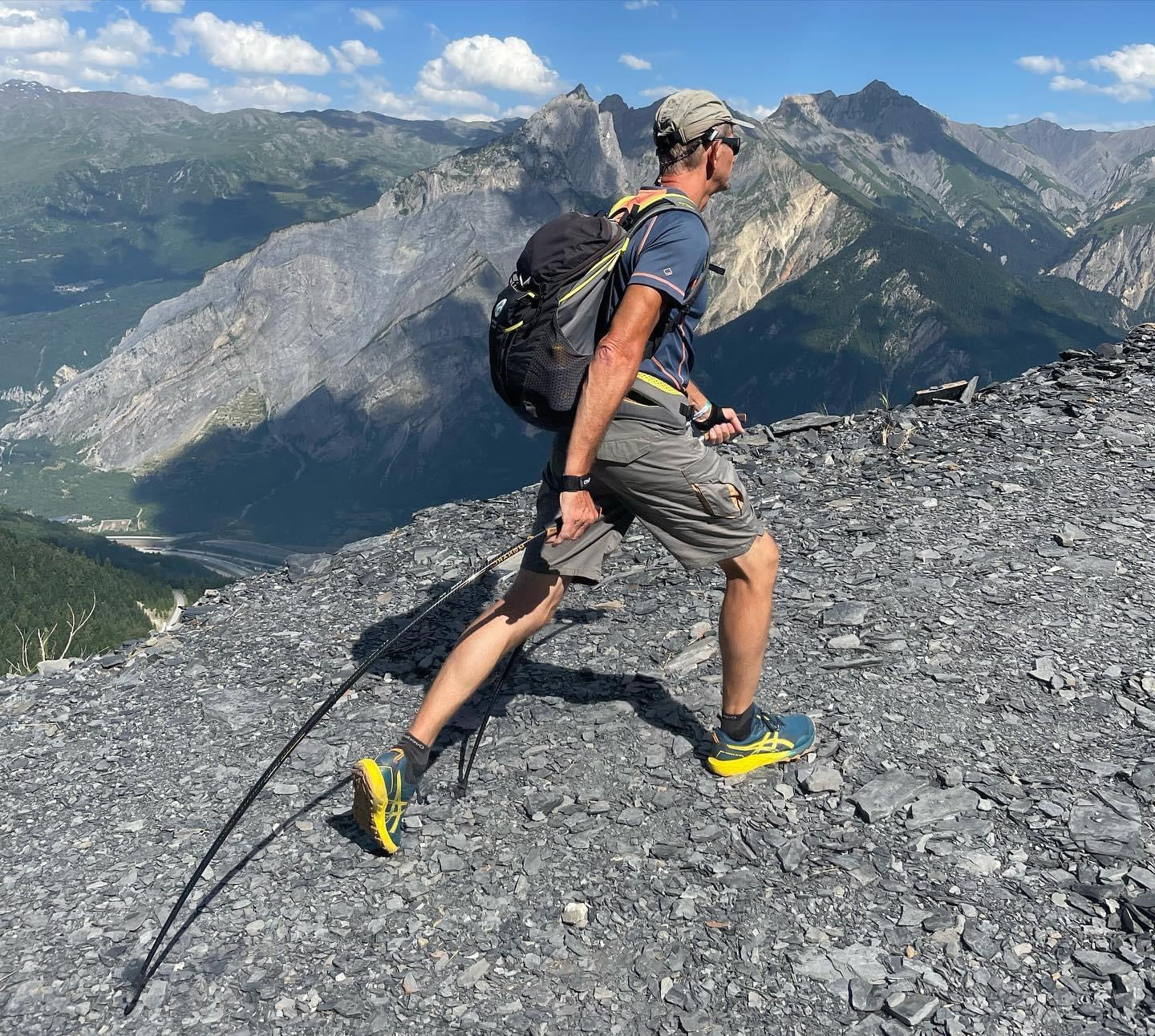
Curved 100% carbon Nordic walking poles, 140 g per pole, designed in France and assembled in France. Their curve directs the push more forwards and reduces the vibrations transmitted to the arms, two effects measured by Université Grenoble Alpes.
Key takeaway: Studies from 2024 show that Nordic walking outperforms HIIT for cardiac rehabilitation. It improves blood pressure, resting heart rate and overall functional capacity.
Going further
- How many calories do you burn Nordic walking? The study figures
- Nordic walking for seniors: benefits and practical advice
- What speed in Nordic walking? Pace, heart-rate zones and progression
- Nordic walking and cholesterol: what do the studies say?
- Nordic walking and hypertension: a recognised activity for controlling blood pressure
Disclaimer. This article provides general information. It does not replace the advice of a doctor or health professional, nor supervision by a qualified instructor. Before starting or stepping up physical activity, especially if you have a health condition, pain or ongoing treatment, consult your doctor. Exercise according to your fitness, on suitable ground and with equipment in good condition. Each reader remains solely responsible for their own practice and for the decisions they make based on this information, and MONARC SAS cannot be held liable for their consequences.