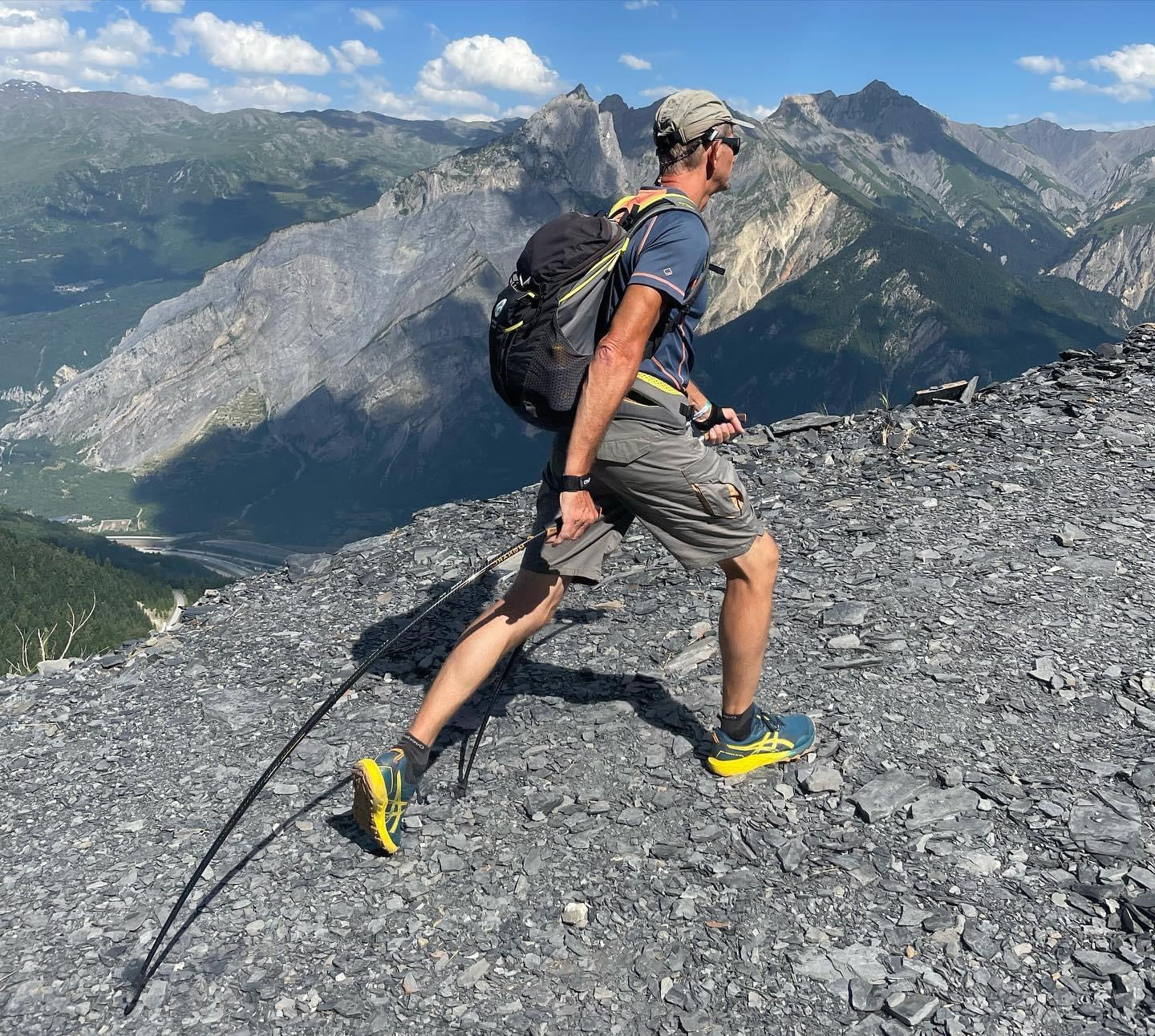
How to Start Nordic Walking Well: 10 Essential Tips
Nordic walking is accessible to almost everyone, whatever the starting fitness level. But like any technical sport, it has to be learned. A few mistakes at the start can slow progress or create needless discomfort.
1. Take an introductory session in a club
Before buying anything, try Nordic walking in a club. Most associations offer free or low-cost discovery sessions, with poles on loan. It is the best way to check that the practice suits you before investing.
2. Choose poles at the right length
Unsuitable poles lastingly hinder learning the right movement. Use the height × 0.68 formula and check with the elbow-angle method. If in doubt, take the smaller size.
3. Learn the movement with a certified instructor
The correct technique (angled plant, extended push behind the hip, arm-leg alternation) is not easily learned alone. Two or three sessions with a certified instructor (FFA or INWA) are generally enough to acquire the basics.
4. Start with short outings
Begin with outings of 30 minutes maximum, at a comfortable pace. Nordic walking works upper-body muscles most people are not used to using: the trapezius, deltoids and triceps can be sore in the first days.
5. Practise on flat terrain first
Flat terrain lets you concentrate on technique without the complication of gradients. Introduce climbs and descents progressively, after mastering the basic movement.
6. Wear suitable shoes
Low-cut trail or hiking shoes are ideal. They offer good foot support, a lugged sole for grip and enough flexibility to feel the roll of the foot.
7. Warm up before, stretch after
5 to 10 minutes of slow walking at the start and a few stretches of the calves, hamstrings and shoulders at the end are enough to prevent soreness and minor injuries.
8. Practise regularly rather than intensely
Two 45-minute outings a week are better than one long weekend outing. Regularity builds fitness and anchors the technique.
9. Do not neglect the straps
Badly fitted or unsuitable straps ruin the technique. Check that they match your hand size and that they detach easily in case of a fall.
10. Join a club to progress
Motivation is easier to maintain in a group. Nordic walking clubs often offer different levels, supervised outings and challenges that keep the desire to practise alive over the long term.

The MØNARC® Arcs de Marche®
Curved 100% carbon Nordic walking poles, 140 g per pole, designed in France and assembled in France. Delivered ready to walk with straps, tungsten carbide tips and a made-to-measure bag.
The eleventh tip: aim for a MØNARC® Partner Club
Since autumn 2026, a label makes the club choice mentioned in tips 1 and 10 easier. The MØNARC® Partner Clubs bring together instructors and walkers who know curved poles, and their members get €30 off per pair of arcs. To weigh up walking alone versus joining a group, our back-to-season article covers the question.
Key takeaway: Start with an introductory club session, learn the movement with an instructor, and favour regularity over intensity in the first weeks.
Going further
- What size Nordic walking poles should you choose? The complete guide
- The basic Nordic walking technique: the beginner's guide
- Choosing your shoes for Nordic walking
- Nordic walking in a group: finding a club and the benefits of the collective
- An 8-week Nordic walking training programme
- MØNARC® Partner Club: the label and its advantages
Disclaimer. This article provides general information. It does not replace the advice of a doctor or health professional, nor supervision by a qualified instructor. Before starting or stepping up physical activity, especially if you have a health condition, pain or ongoing treatment, consult your doctor. Exercise according to your fitness, on suitable ground and with equipment in good condition. Each reader remains solely responsible for their own practice and for the decisions they make based on this information, and MONARC SAS cannot be held liable for their consequences.