Nordic Walking and Osteoarthritis: An Activity Endorsed by Rheumatologists
Osteoarthritis affects more than 10 million people in France. While natural instinct pushes people to avoid effort to "spare" the affected joints, current medical recommendations go the other way: adapted movement is the best therapy for mild to moderate osteoarthritis. And Nordic walking is one of the most suitable activities.
Why movement helps osteoarthritis
Joint cartilage has no direct blood supply: it feeds by soaking up synovial fluid during the joint's cyclical compression and decompression. Immobility deprives the cartilage of this nutrition and accelerates its degradation. Regular, gentle, repeated movement is, on the contrary, regenerative.
The 30% reduction in joint stress
Nordic walking reduces the pressure on the knees, hips and spine by 30% compared with ordinary walking. This figure, measured in biomechanical studies, is explained by the distribution of loads over four support points. For someone with fragile joints, that difference is considerable over the long term.
The Swiss League Against Rheumatism recommends it
The Swiss League Against Rheumatism is among the medical institutions that explicitly recommend Nordic walking for people with osteoarthritis, notably because of its low joint stress and its benefits for the muscles supporting the joints.
Advice for people with osteoarthritis
- Start with very short outings (15 to 20 minutes) on flat terrain
- Avoid very rough terrain or long descents if you have knee osteoarthritis
- Always warm up before effort and stretch afterwards
- During an inflammatory flare-up (hot, swollen joint), wait for it to calm before resuming
- Choose poles with a good vibration-damping system

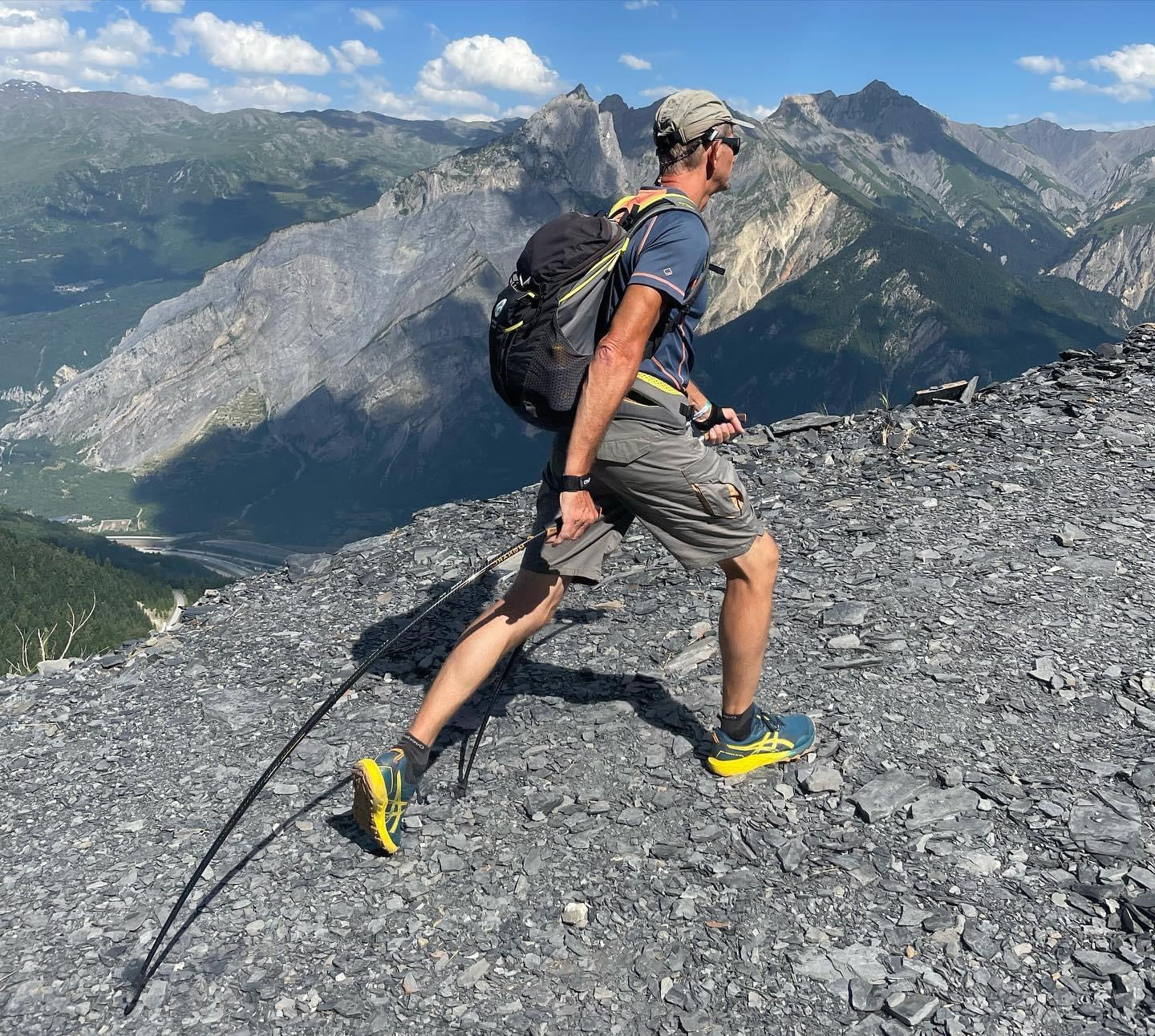
The MØNARC® Arcs de Marche®
Curved 100% carbon Nordic walking poles, 140 g per pole, designed in France and assembled in France. Their curve directs the push more forwards and reduces the vibrations transmitted to the arms, two effects measured by Université Grenoble Alpes.
Key takeaway: Nordic walking is recommended for mild to moderate osteoarthritis. It reduces joint stress by 30% and maintains the supporting musculature without aggravating the lesions.
Going further
- Nordic walking for seniors: benefits and practical advice
- Nordic walking and back pain: what science says
- Nordic walking and osteoporosis: why poles make the difference
- Nordic walking and knee pain: answers to the most frequent questions
Disclaimer. This article provides general information. It does not replace the advice of a doctor or health professional, nor supervision by a qualified instructor. Before starting or stepping up physical activity, especially if you have a health condition, pain or ongoing treatment, consult your doctor. Exercise according to your fitness, on suitable ground and with equipment in good condition. Each reader remains solely responsible for their own practice and for the decisions they make based on this information, and MONARC SAS cannot be held liable for their consequences.