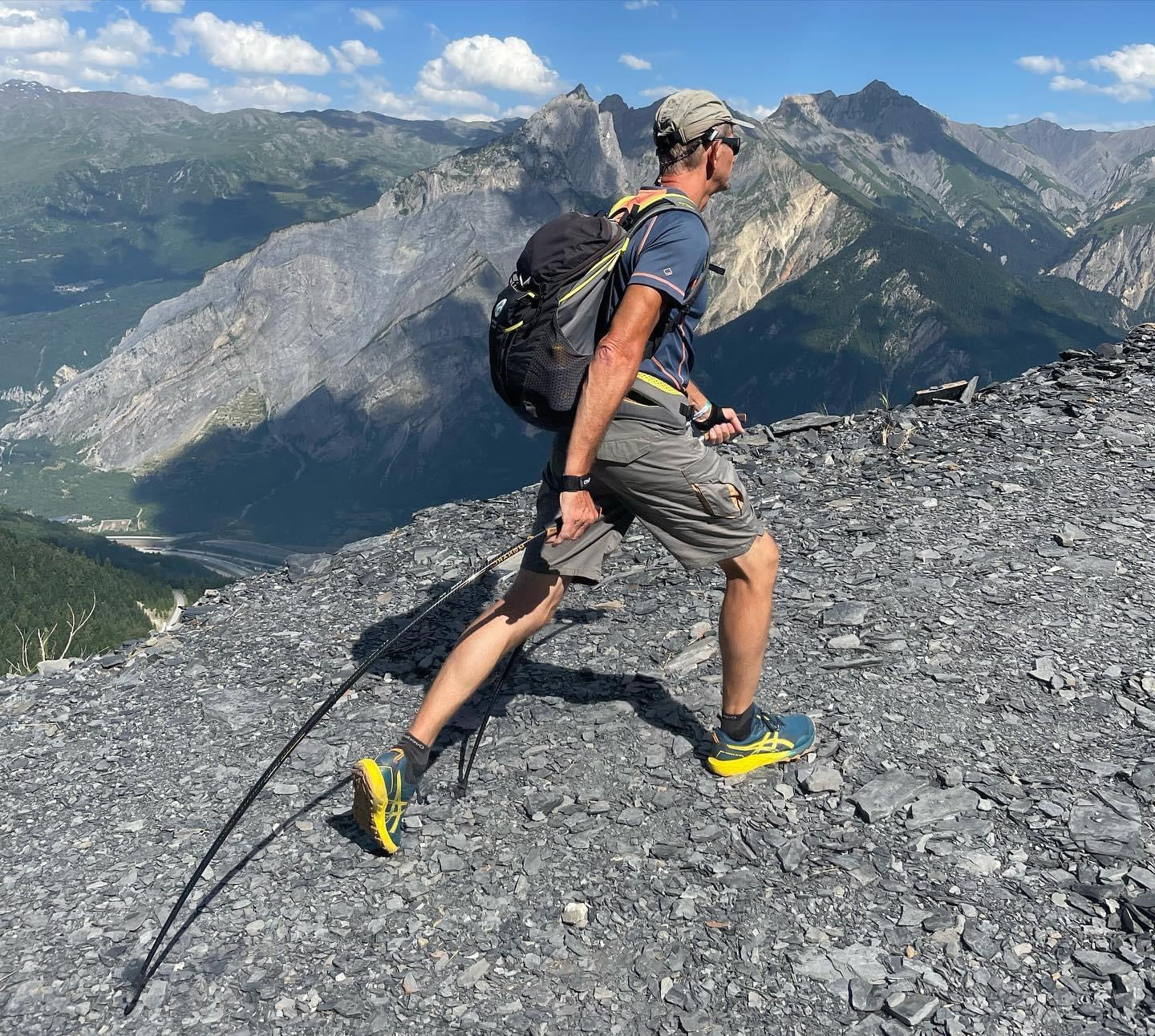
Nordic Walking and Osteoporosis: Why Poles Make the Difference
Yes, Nordic walking is a good activity if you have osteoporosis or want to prevent it, as long as you practise it carefully and combine it with other exercise. It works your legs under body weight, engages your arms through the poles and trains your balance, which matters as much as bone strength when it comes to avoiding fractures. Here is what the studies really show, and how to walk safely.
In short
- Osteoporosis is common. It affects around 4 million people in France. Worldwide, one woman in three and one man in five over 50 will have a fracture caused by fragile bones.
- Exercise protects. In trials, it cuts the number of fractures by a third, and by more than half when it is supervised.
- Nordic walking alone does not rebuild bone. It mainly helps limit bone loss and maintain strength, mobility and balance. Combine it with strength training.
- Poles change two things. They give you two extra points of support on the ground, and they pass a load up to the wrists, which ordinary walking does not work.
- To walk safely, ask your doctor's advice, choose stable ground and good shoes, use poles of the right length, build up slowly and, ideally, walk with a club and an instructor.
Osteoporosis in a few figures
Osteoporosis is a skeletal disease. Bone mass decreases and the internal structure of the bone deteriorates, so the bone breaks more easily. It causes no pain until a fracture occurs, hence its nickname, the silent disease. It is diagnosed with a bone density scan (DXA), which measures bone mineral density. Osteoporosis means a T-score of −2.5 or lower, and osteopenia a T-score between −1 and −2.5 (Inserm).
- Around 4 million people were affected in France in 2019, or 5.5% of the population (Inserm).
- 39% of women aged 65 have the disease, as do 70% of women aged 80 and over. The disease is two to three times more common in women, because of the drop in oestrogen at menopause, but a quarter of fragility fractures affect men.
- 484,000 fragility fractures occurred in France in 2019, mainly of the hip, the vertebrae and the wrist.
- Worldwide, one woman in three and one man in five over 50 will have an osteoporotic fracture in their lifetime (International Osteoporosis Foundation, IOF).
Most osteoporotic fractures happen during a fall (GRIO). To prevent them, you therefore need both to keep your bones as strong as possible and to avoid falling, and physical activity acts on both.

What exercise can do for your bones
Bone is living tissue that constantly renews itself and adapts to the loads it receives. The impact of your feet on the ground and the pull of muscles on their attachments prompt it to grow stronger, exactly where they act. Conversely, a sedentary lifestyle speeds up bone loss. The major reviews are encouraging:
- Fewer fractures. Across 20 trials in adults aged 45 and over, exercise programmes are linked to a third fewer fractures. When the exercise is supervised, the reduction reaches 56%; without supervision, it is no longer significant (Hoffmann et al., 2022).
- Fewer falls. In people over 60, regular exercise reduces the number of falls by 23%, and balance and functional exercise by 24% (Sherrington et al., 2019, 59 trials).
- Better-preserved bone density. For this, the bone must be loaded hard enough. Walking alone has a small effect, since one review found no effect on the spine and a barely significant effect at the femoral neck (Martyn-St James and Carroll, 2008). Supervised high-intensity strength training combined with impact does better. In the LIFTMOR trial, two 30-minute sessions a week for 8 months increased lumbar spine density by 2.9%, while it fell by 1.2% in the control group (Watson et al., 2018).

The recommendations all point the same way and advise combining several types of exercise. The World Health Organization advises people over 65 to do 150 to 300 minutes of moderate activity a week, strength training on at least two days a week, and balance and strength exercise on at least three days a week to prevent falls (Bull et al., 2020). The UK consensus statement endorsed by the Royal Osteoporosis Society adds moderate impacts on most days for people without a vertebral fracture. After a vertebral fracture, it advises not going beyond the intensity of brisk walking (Brooke-Wavell et al., 2022).
What the studies really show about Nordic walking and bone density
Nordic walking is a weight-bearing activity, because your legs carry your body weight at every step, as in ordinary walking. What sets it apart is the poles, which also work the arms and pass part of the push up to the wrists. Few studies have measured its effect on bone, and they are small. The table below summarises the main ones.
| Study | Participants | Programme | Effect on bone |
|---|---|---|---|
| Kato et al., 2020 | 37 young women, average age 21 | 30 to 60 min, 3 times a week, 6 months | Mineral content and density up at the end of the radius (wrist), no change higher up the forearm |
| Du et al., 2021 | 63 postmenopausal women aged 50 to 65, with prediabetes | 30 to 60 min, 2 to 3 times a week, 8.6 months on average | Lumbar spine density stable, while it fell by 1.8% in the control group; no clear difference at the hip |
| Wochna et al., 2022 | 25 women aged 61 to 75 | Twice a week, 8 weeks | No change in density, because 8 weeks is too short a time for bone |
| Rodrigues et al., 2021 (review of 13 trials, 3 of them on Nordic walking) | Adults aged 50 and over with low bone density | Varied | Nordic walking improves mobility (very low certainty); walking alone has no proven effect at the femoral neck |
In short, Nordic walking mainly helps slow bone loss and keep you mobile. No study has shown that it is enough, on its own, to rebuild osteoporotic bone. Be wary of shortcuts, because the Japanese study often quoted about the wrist was carried out in healthy young students, and not in people with osteoporosis.
Poles also load the wrist
The Kato et al. result is still interesting. The radius, the forearm bone that breaks at the wrist, never carries body weight in daily life. With poles, every push sends a force from the ground up to the hand. After 6 months, the walkers had gained bone mineral content at the end of the radius, the part richest in spongy bone, which responds best to loading. The authors attribute this to the push on the poles, transmitted through the strap and the grip. It has not yet been shown in older people or people with osteoporosis, but it is one more reason for an active push, with straps that transmit the effort without you having to grip the handle.
The main issue is avoiding falls
A wrist or hip fracture almost always starts with a fall. Yet balance, leg strength and reflexes decline with age. This is where Nordic walking has its strongest results.
- Balance: a meta-analysis of 15 studies in people aged 60 to 92 shows that, compared with sedentary people, Nordic walking improves dynamic and functional balance, the kind you use when walking (Bullo et al., 2018).
- Strength and mobility: in 45 women aged 63 to 79 with osteopenia or osteoporosis, 12 weeks of Nordic walking, 3 times a week, improved thigh strength, mobility (Timed Up and Go test) and the distance walked in 6 minutes (Ossowski et al., 2016).
- Stability: poles give you two extra points of support and widen your base of support. Many walkers use them to feel steadier, especially on uneven ground or downhill.
These results do have their limits. In an 8-week trial, Nordic walking did no better than ordinary walking at the same intensity, with both groups improving their balance (Gomeñuka et al., 2019). And no study has yet shown that it reduces the number of falls on its own. Its main strength is that people happily keep it up for years, outdoors and in groups. And regularity is the key to any prevention programme. If you are getting back into activity, our article Starting Nordic walking at 50, 60 or 70 guides you step by step.
Walking safely with osteoporosis
Nordic walking is a moderate activity, with no jumping and no violent impact. With a few precautions, it suits most people with osteoporosis, and six rules will help you practise it safely.

1. Ask your doctor
This is essential if you have already had a fracture, especially a vertebral one, if you have back pain, if you have fallen recently or if a treatment affects your balance. Your doctor can refer you to a physiotherapist or an adapted physical activity instructor.
2. Choose stable ground
To start with, choose flat, even paths, parks and greenways. Avoid sloping paths, loose stones, mud, wet leaves and ice. On tarmac, rubber pads grip better than the metal tip. Our advice for walking in town is in the article Nordic walking in town: tips, terrain and equipment.
3. Wear shoes that hold your foot
A grippy, lugged sole, a well-supported heel and good cushioning are your first protection against slipping. Replace worn-out soles. To choose well, read our guide Choosing shoes for Nordic walking.
4. Use poles of the right length
Too long, they push your shoulders up; too short, they make you lean forward, a bending of the back to avoid when your vertebrae are fragile. To find the right length, multiply your height by 0.68 (length = height × 0.68). Between two lengths, take the shorter one (a very sporty walker can take the one above). In the MØNARC® Pack, choose 100 cm up to 1.57 m and 110 cm from 1.58 m. All the details, straps included, are in our size guide.
5. Keep your back straight and your movements smooth
Nordic walking is done with an upright trunk, looking ahead. Bone specialists also recommend limiting bending and twisting of the back, and avoiding sudden movements (GRIO). Push progressively, hands relaxed in the straps, without jerks. The basics of the movement are in our guide to basic technique, and if you also have back pain, read Nordic walking and back pain: what the science says.
6. Build up slowly
Start with 20 to 30 minutes, two to three times a week, on the flat, then add 5 to 10 minutes a week if all goes well. Then aim for 30 to 60 minutes, three times a week, as in the studies. Unusual pain in the back or a joint is a sign to slow down and talk to your doctor.
A typical week
Nordic walking is not enough on its own, so add strength and balance exercises. For example, you can stand up from a chair without using your hands, climb stairs, stand on one leg near a support and strengthen your back muscles in extension. Avoid exercises that strongly round the back, such as touching your toes with straight legs or sit-ups (Brooke-Wavell et al., 2022).
| Day | Activity | Duration |
|---|---|---|
| Monday | Nordic walking on flat ground | 30 to 45 min |
| Tuesday | Strength (chair, stairs, back) | 20 min |
| Wednesday | Rest or an easy walk | As you like |
| Thursday | Nordic walking at a club, with an instructor | 1 h |
| Friday | Balance and strength | 20 min |
| Saturday | Nordic walking, easy and varied route | 45 to 60 min |
| Sunday | Rest | – |
Adapt it with your doctor or physiotherapist, according to your fitness and medical history.
What the Arcs de Marche® change
We designed the MØNARC® Arcs de Marche® for the Nordic walking movement, rather than by adapting a hiking pole. Their full-length curve follows the natural path of the arm and directs the push forwards. They are the first poles whose shape has been scientifically compared with straight poles, by a team from Université Grenoble Alpes, with eight regular walkers aged 64.5 on average.

- A more horizontal push: the angle of the pole to the ground drops from 46° to 33°, and propulsion is 22% more efficient, with no increase in oxygen consumption or heart rate.
- Less vibration in the arms: it drops by 22% at 5 km/h and by 26% at 6 km/h.
- The upper body tends to work harder (biceps, triceps, deltoids, back muscles), while some leg muscles work slightly less. This trend is not always significant with eight participants.
- Perceived effort is lower at 5 km/h, and comfort and enjoyment increase at 6 km/h.
We should point out that no study has measured the effect of the Arcs on bone, and we promise you nothing of the kind. They give you a light pole (140 g, T700 carbon), with a consistent grip and pleasant to push, that makes you want to go out often, and regularity is what counts with osteoporosis. All the results are set out in the Université Grenoble Alpes study.
At a club, supervision makes the difference
Supervised exercise reduces fractures more clearly than exercise done alone (Hoffmann et al., 2022), and this may be the most important figure in this article. A club provides exactly that, with a trained instructor who corrects your technique and chooses suitable routes, and a group that helps you keep going. To find a club near you, read Nordic walking in a group: finding a club near you or see the list of MØNARC® partner clubs.
Do you run a club? MØNARC® Partner Clubs give their members €30 off each pair of Arcs de Marche® and preferential terms on certified training courses. You can thus equip your walkers with a light pole and train them in careful technique.
This article is for information only and does not replace medical advice. If you have osteoporosis or risk factors, talk to your doctor before starting or stepping up physical activity.
Frequently asked questions
Is Nordic walking recommended for osteoporosis?
Yes, it generally is. It is a weight-bearing activity of moderate intensity, with no violent impact, that maintains strength, balance and mobility. Bone specialists advise combining it with strength training and balance exercises. Ask your doctor before you start.
Does Nordic walking increase bone density?
It mainly helps maintain it. In postmenopausal women, lumbar spine density stayed stable with Nordic walking while it fell without exercise (Du et al., 2021). In young women, it increased bone mineral content at the wrist (Kato et al., 2020). No study shows that it is enough, on its own, to treat osteoporosis.
Can I do Nordic walking after a vertebral fracture?
It is often possible, with your doctor's agreement and ideally with help from a physiotherapist. Stay at the intensity of brisk walking, on flat ground, with an upright trunk, and avoid movements that round your back.
How many times a week should I walk?
The studies use two to three sessions of 30 to 60 minutes a week. Start shorter, build up gradually and add two strength and balance sessions.
Do poles prevent falls?
They give you two extra points of support, and Nordic walking improves dynamic balance. But no study has yet proved that it reduces the number of falls on its own. So keep choosing suitable ground and good shoes.
What length of pole should I choose?
Multiply your height by 0.68 and, between two lengths, take the shorter one. In the MØNARC® Pack, choose 100 cm up to 1.57 m and 110 cm from 1.58 m. You will find all the details in our size guide.
Sources
- Inserm, “Ostéoporose”, information file, 2023.
- International Osteoporosis Foundation (IOF), epidemiological data, accessed October 2026.
- GRIO (French osteoporosis research and information group), “Restez actifs pour protéger vos os”, leaflet.
- Hoffmann I. et al., Journal of Bone and Mineral Research, 2022, 37(11): 2132-2148.
- Sherrington C. et al., Cochrane Database of Systematic Reviews, 2019, CD012424.
- Martyn-St James M., Carroll S., Bone, 2008, 43(3): 521-531.
- Watson S.L. et al., Journal of Bone and Mineral Research, 2018, 33(2): 211-220.
- Bull F.C. et al., British Journal of Sports Medicine, 2020, 54(24): 1451-1462.
- Brooke-Wavell K. et al., British Journal of Sports Medicine, 2022, 56(15): 837-846.
- Kato T. et al., Journal of Sports Science and Medicine, 2020, 19(2): 237-244.
- Du X. et al., International Journal of Environmental Research and Public Health, 2021, 18(14): 7570.
- Wochna K. et al., Scientific Reports, 2022, 12: 20089.
- Rodrigues I.B. et al., Journal of Aging and Physical Activity, 2021, 29(5): 886-899.
- Bullo V. et al., Rejuvenation Research, 2018, 21(2): 141-161.
- Ossowski Z.M. et al., Clinical Interventions in Aging, 2016, 11: 1763-1771.
- Gomeñuka N.A. et al., PLoS One, 2019, 14(1): e0211472.
- Termoz N., Depery E., Lorenzi G., Université Grenoble Alpes, study comparing straight poles and MØNARC® curved poles.

The MØNARC® Arcs de Marche®
These curved 100% carbon Nordic walking poles weigh 140 g each and are designed and assembled in France. They are delivered ready to walk with straps, tungsten carbide tips and a made-to-measure bag.
Disclaimer. This article provides general information. It does not replace the advice of a doctor or health professional, nor supervision by a qualified instructor. Before starting or stepping up physical activity, especially if you have a health condition, pain or ongoing treatment, consult your doctor. Exercise according to your fitness, on suitable ground and with equipment in good condition. Each reader remains solely responsible for their own practice and for the decisions they make based on this information, and MONARC SAS cannot be held liable for their consequences.