Nordic Walking for Seniors: Benefits and Practical Advice
Nordic walking is often described as the ideal sport for people over 60. This claim is not a commercial argument: it rests on solid medical and biomechanical data.
Why poles change everything after 60
With age, balance and proprioception (the body's ability to locate itself in space) gradually decline. Nordic walking poles offer two additional support points that secure every step, reduce the fear of falling and let you go further with less muscle fatigue.
Less pressure on the joints
Knees, hips and ankles are joints that are particularly stressed and weakened with age. Distributing loads over four supports (two poles, two legs) reduces the pressure on these joints by 30%. Nordic walking is thus recommended for people with mild to moderate osteoarthritis.
Osteoporosis prevention
The repeated, controlled impact of the poles on the ground generates beneficial mechanical stimulation of the bones. Combined with the muscular work of the upper body, this effect helps preserve bone density and slow the progression of osteoporosis, which is particularly common in women after the menopause.
Social activity and mental wellbeing
Nordic walking is very often practised in groups within clubs or associations. For seniors, this social dimension is crucial: it breaks isolation, maintains social ties and contributes to better psychological balance. Studies show a reduction in depressive symptoms among regular practitioners.
A club that lasts: the MØNARC® Partner Club marker
Regularity, the first benefit of Nordic walking after 60, rarely holds without a group. Since autumn 2026, the MØNARC® Partner Club label helps you choose yours: it distinguishes clubs able to support all equipment, straight poles and walking arcs alike, and opens €30 off per pair of arcs for their members. To weigh up walking alone versus with a group, our dedicated article covers the question.
Tips for starting after 60
- Start with outings of 20 to 30 minutes on flat terrain
- Choose poles with an ergonomic grip and a well-fitted strap
- Take 2 or 3 lessons with a certified instructor to learn the right movement from the start
- Increase duration and intensity progressively over 4 to 6 weeks
- Consult your doctor if you have a cardiovascular history

The MØNARC® Arcs de Marche®
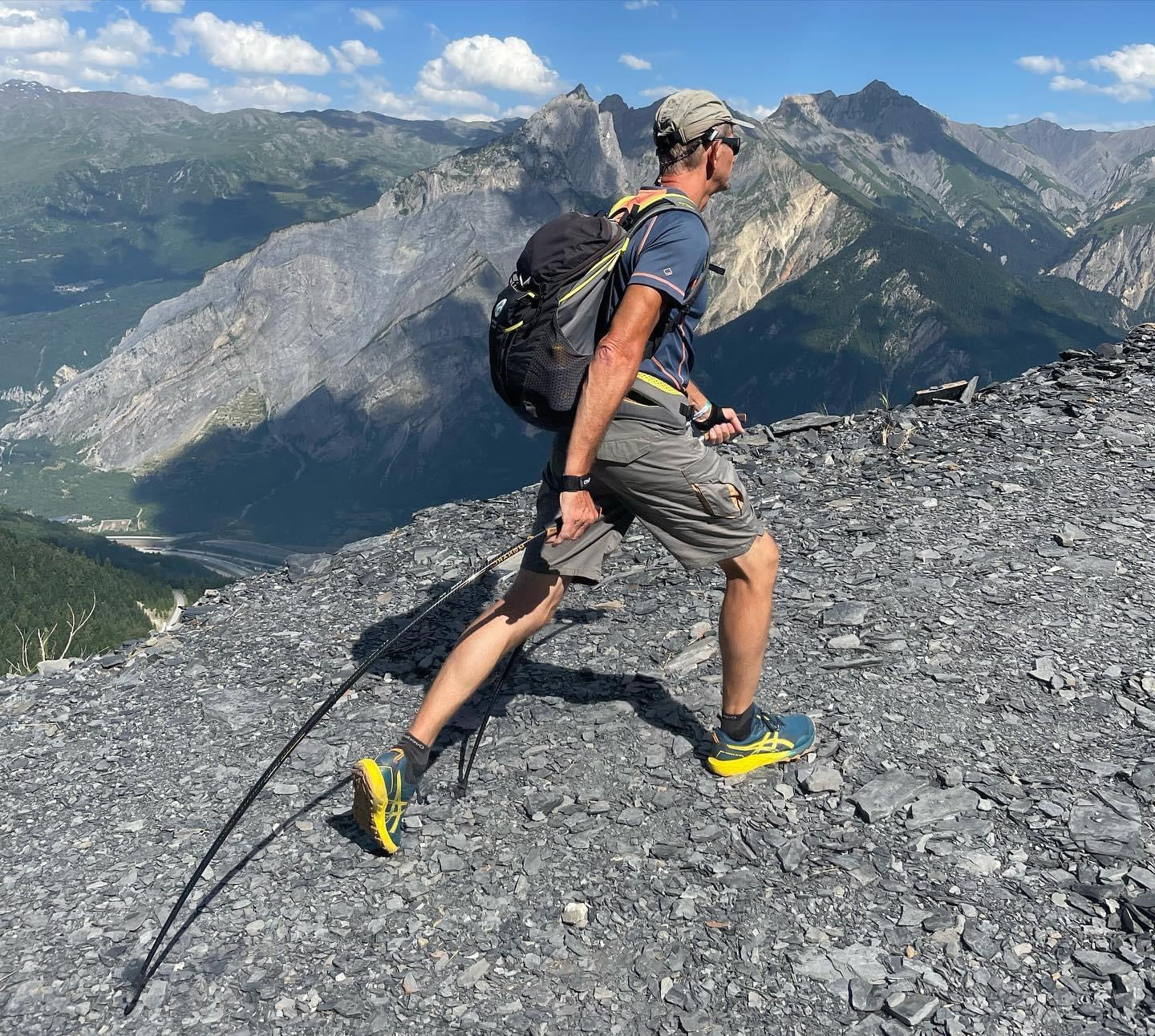
Curved 100% carbon Nordic walking poles, 140 g per pole, designed in France and assembled in France. Their curve directs the push more forwards and reduces the vibrations transmitted to the arms, two effects measured by Université Grenoble Alpes.
Key takeaway: Nordic walking is particularly suited to seniors: it protects the joints, preserves bone density, improves balance and encourages social ties.
Going further
- Nordic walking and back pain: what science says
- Nordic walking and heart health: what the studies confirm
- Nordic walking and osteoarthritis: an activity endorsed by rheumatologists
- Nordic walking and osteoporosis: why poles make the difference
- Nordic walking in a group: finding a club and the benefits of the collective
- Starting Nordic walking at 50, 60 or 70: how to do it without getting injured
Disclaimer. This article provides general information. It does not replace the advice of a doctor or health professional, nor supervision by a qualified instructor. Before starting or stepping up physical activity, especially if you have a health condition, pain or ongoing treatment, consult your doctor. Exercise according to your fitness, on suitable ground and with equipment in good condition. Each reader remains solely responsible for their own practice and for the decisions they make based on this information, and MONARC SAS cannot be held liable for their consequences.